
A storm can put thousands of roofs on your radar overnight. The hard part is turning that broad opportunity into a clear, assigned, campaign-ready list before your team starts knocking doors, calling homeowners, or sending mail. Roofing storm response prospecting works best when you control the territory first, then build only the property list your team can realistically work.
Buying a large storm-area list may seem fast, but it often creates more cleanup than momentum. Records may fall outside your service range, overlap with another team's turf, or include areas where your crews have no capacity. A better approach starts with the map: choose the affected streets, find the properties inside them, organize the records by priority, and export the list into the outreach tools your team already uses.
Why storm response prospecting breaks down
Storm response creates urgency, but urgency also exposes weak sales operations. A manager sees hail reports, storm tracks, or early job activity and tells the team to work an area. Then the questions begin: Which streets count? Who owns the territory? Which properties are already being worked? Which homes are near an existing job? Where is the actual list?
Too often, the answer lives across a map screenshot, a purchased spreadsheet, and a group text. That makes it difficult to assign work cleanly or measure what happened after the first day.
The goal is not to collect every possible record in a county. The goal is to build a defined campaign your team can execute. That means a boundary everyone understands, properties selected for a reason, and a status system that shows whether a prospect is unworked, assigned, contacted, inspected, or no longer a fit.
Start with the area, not the spreadsheet
A storm map is a starting point, not a prospecting plan. Hail size estimates, wind paths, and reports can help identify where to look, but they do not tell you exactly where your sales team should work first. You still need to account for drive time, crew capacity, local competition, existing customers, and nearby jobs that can support neighborhood saturation.
Choose an area your team can cover well. That might be a tight group of subdivisions near a recent inspection, a ZIP code with confirmed storm activity, or a set of streets around an active job site. A smaller, clearly defined territory often produces better field execution than a massive boundary that no one can finish.
Draw the exact streets or neighborhood your team wants to prospect. Avoid vague instructions such as “work the north side” or “hit everything near the hail path.” Clear boundaries prevent two reps from working the same homes and keep your campaign from drifting into low-priority areas.
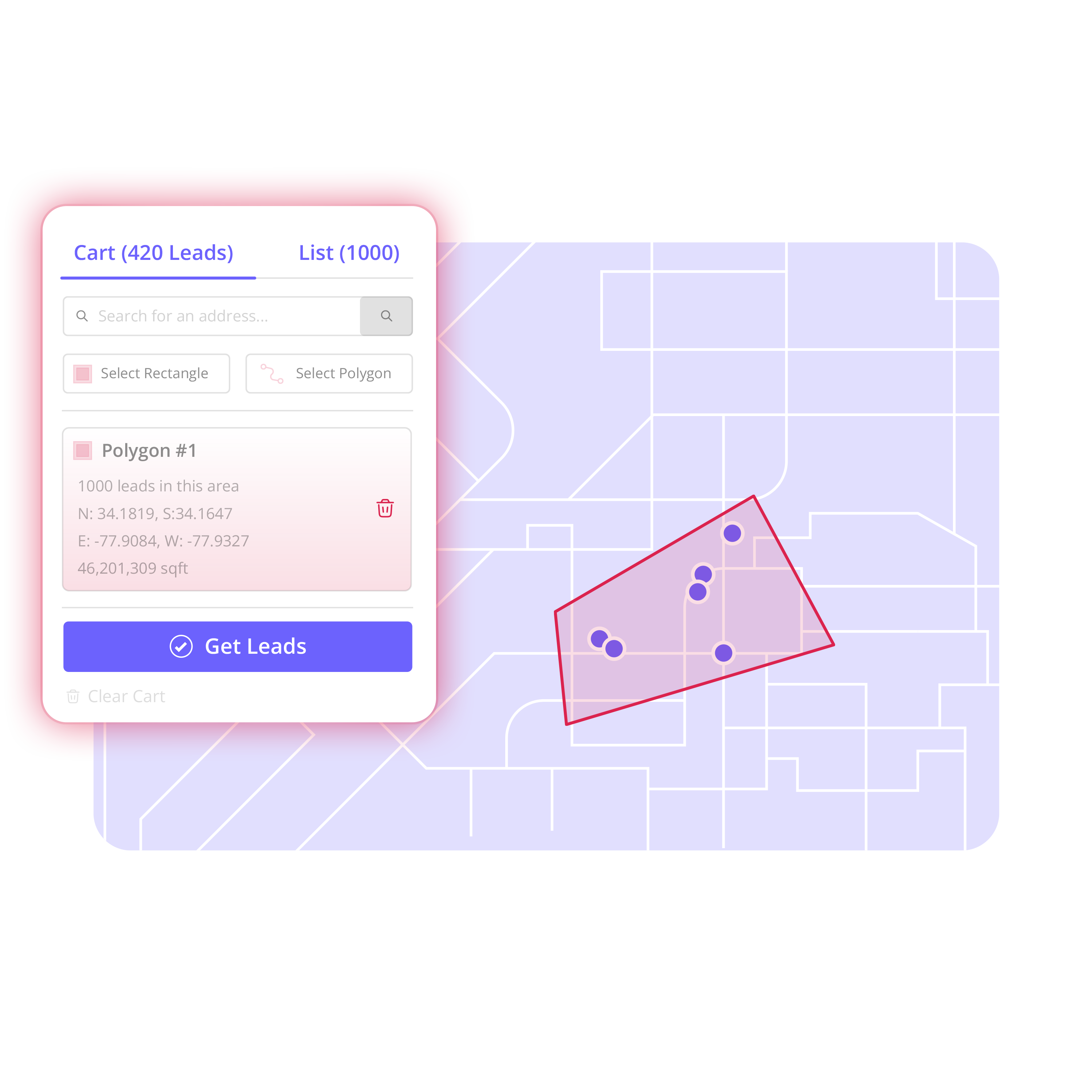
This is where territory-first software earns its place. In Territory, you can search for a market or address, draw a custom area, and identify the properties within that boundary. The map becomes a usable starting point for a sales campaign, not another reference your team has to interpret.
A practical roofing storm response prospecting workflow
1. Choose the response zone
Build your first territory around a specific operational reason. Perhaps your production team can support work within 20 minutes of a branch. Perhaps a recent inspection confirms damage in a neighborhood. Perhaps you want to work outward from a signed job because the visible yard sign and crew presence create a natural conversation starter.
Name the territory clearly. Use a format your entire team can recognize, such as “May 14 Hail - Westfield Phase 1” or “Wind Event - Cedar Grove Job Radius.” The name should tell a manager what happened, where the campaign is, and how it differs from the next area.
If the storm footprint is large, split it into manageable zones instead of creating one oversized list. Divide by neighborhood, rep assignment, or campaign phase. Your first zone can be the closest, highest-confidence area. Expand once the team has worked it and your operations capacity remains available.
2. Find the properties inside the boundary
Once the territory is drawn, find the properties inside it. This is the point where a storm-response idea becomes a defined universe of homes.
Do not assume every property deserves equal attention. A practical first pass may prioritize owner-occupied homes, properties near current jobs, homes in subdivisions with accessible streets, or records that fit your company's service and project profile. The right filter depends on how your company sells and what your crews can take on.
For example, a company with a strong door-knocking team may build a dense, walkable neighborhood list. A company relying on direct mail and phone outreach may choose a broader territory, then segment it by property characteristics and available contact information. The strategy changes, but the need for a clean boundary does not.
3. Build a list your team can actually work
Add selected properties to a dedicated campaign list rather than dumping everything into one general storm database. This keeps the response effort separate from old leads, retail inquiries, and future prospecting areas.
Give the list a clear owner. A canvassing manager may own door assignments while a sales manager owns follow-up standards. If those responsibilities sit with different people, organize the records so each person can see the same campaign status without relying on copied spreadsheets.
Before outreach begins, define a few practical statuses. Unworked, assigned, contacted, appointment set, inspection completed, and do not pursue are usually enough for a field campaign. Too many status options slow down reps and make reporting inconsistent. The point is to show the next action, not create an administrative burden.
Tags can add context without cluttering the main status. Tag properties by storm event, neighborhood, job radius, assigned rep, or outreach channel. Later, you can filter the campaign to see which zone has been worked, which rep needs more records, or which homes should move into a follow-up sequence.
4. Enrich only the records that matter
Storm response can generate a large number of properties quickly. That does not mean you need to enrich every record before your team takes the first action.
Add available homeowner and contact information selectively for the records you intend to pursue through compliant phone, direct-mail, or other permitted outreach. For a door-knocking campaign, the physical property list may be enough to start. For a follow-up campaign, enrichment can help the team prepare the records that received an initial conversation, a door hanger, or a no-answer visit.
This approach controls cost and reduces wasted effort. It also gives your team a more disciplined process: build the geographic list first, then add detail when a property reaches the right stage. Available contact information does not replace your responsibility to follow applicable outreach rules, suppression requirements, and consent standards.
5. Assign and work the territory without overlap
A good storm campaign is visible in the field and visible in operations. Reps need a clear set of homes to work. Managers need to see where coverage ends and whether the team is spending time in the right neighborhoods.
Assign territories or list segments before the morning meeting. If one rep is working the east entrance and another is working the streets around an active job, document that decision in the campaign organization. Do not leave assignments to memory or informal chat messages.
There is a trade-off here. Tight assignments improve accountability, but overly rigid boundaries can leave a rep standing on one side of a street while a strong conversation develops nearby. Give managers a simple rule for exceptions. For example, reps may work immediately adjacent homes but must update the record before claiming a new block. The rule matters less than making ownership clear.
6. Export clean data into the tools you already use
Your prospecting platform does not need to replace your CRM, canvassing app, dialer, or mail provider. It should prepare the list that feeds those systems.
After you choose the territory, build the list, and organize the records, export a clean CSV for the campaign tool your team uses next. Include the fields that matter for that destination: property address, homeowner details when appropriately available, tags, status, rep assignment, and notes. Remove fields that create confusion or are not needed downstream.
Keep the source campaign intact after export. If the CRM receives updates from outreach, make sure your team has a practical process for reflecting meaningful results in the territory list as well. Otherwise, the map view and the sales system will slowly tell different stories.
Use job-site momentum without making assumptions
A signed roofing job can help focus storm response prospecting, especially when the neighborhood has visible storm activity. Nearby homeowners may notice trucks, materials, and crews. Your sales team has a legitimate reason to introduce itself and explain what it is doing in the area.
Still, proximity is not proof of damage. Train reps to lead with an inspection offer or a factual explanation of the local work, not a claim that a homeowner needs a roof. That protects your brand and creates a more credible conversation.
Build a radius or custom shape around active jobs when it fits your strategy, then organize those properties separately from the broader storm area. This lets you compare job-site saturation against general storm prospecting without mixing the results.
Measure execution before judging the territory
A territory can underperform for several reasons. The storm impact may be light. The neighborhood may have heavy competitor activity. Your offer may not fit the homeowner's timing. But sometimes the issue is simpler: the list was never fully worked.
Track the operational basics first. How many properties were assigned? How many were approached or contacted? How many received follow-up? How many inspections were set? Those numbers show whether the team executed the campaign before you decide the area was a poor choice.
When a zone is complete, preserve the history. Keep the territory name, storm event tag, dates worked, and outcomes available for future planning. If another weather event hits nearby, you will know where your team already has contact history and where a new campaign can begin.
Storm response rewards speed, but fast does not have to mean disorganized. Choose the area. Build the list. Give every record an owner and a next step. Then let your team spend its time talking to homeowners instead of sorting out who should knock which street.