
A property inside your target neighborhood is not automatically a prospect you should assign, enrich, or contact. Before a rep knocks doors around a recent roof replacement, sends mail into a storm-affected area, or calls an owner about an off-market acquisition, verify who owns the property and whether the record is current. That is how to verify property ownership without building a campaign around stale, incomplete, or mismatched data.
For field sales teams, the goal is not to become a title examiner. The goal is to confirm enough information to build a usable list, assign the right territory, and avoid avoidable mistakes. Choose the area. Find the properties. Verify the ownership signal that matters for your campaign. Then organize and export a list your team can actually work.
How to verify property ownership for prospecting
Start with the property address and confirm it against a public record source. In most U.S. counties, the assessor, property appraiser, recorder, clerk, or tax collector maintains some form of searchable property record. The exact office and level of detail vary by county, but the record often shows the assessed owner, mailing address, parcel number, property characteristics, and tax status.
Search by street address first. If the address produces more than one result, use the parcel number, legal description, or map location to make sure you have the right parcel. This matters in subdivisions with similar street names, multifamily buildings, vacant lots, and properties that have recently been split or combined.
Look for the owner name and the date tied to the most recent recorded transfer. If the owner listed in the assessor record differs from a recent deed, do not assume either source is wrong. Assessment systems and recorded deed systems update on different schedules. For a time-sensitive acquisition, legal notice, or high-value transaction, confirm through the county recorder's deed index or work with a qualified title professional.
For routine canvassing, direct mail planning, or service-area prospecting, an ownership record is usually one part of campaign preparation, not the final word on legal title. Keep that distinction clear.
Know what each record can tell you
County assessor or property appraiser records are often the fastest place to identify the assessed owner and property details. They are useful when you need to screen a neighborhood by property type, assessed value, year built, or mailing address.
County recorder or clerk records are more useful when you need to see recorded deeds, transfers, liens, or legal documents. They can help you understand whether a sale or ownership transfer has been recorded, although document indexing and image availability differ by county.
Tax records can support the picture by showing where tax bills are mailed. A mailing address outside the property address may indicate an absentee owner, a landlord, a trust, or an LLC. It does not, by itself, prove who has authority to make a decision about the property.
Title reports provide a deeper review of ownership and recorded interests. They are appropriate when the decision carries legal, financial, or transaction risk. A prospect list is not a substitute for a title search, and public-record data should not be treated as a guarantee of title.
Build verification into the territory workflow
The fastest way to create bad data is to collect names first and decide where to work later. Geographic teams should reverse that process. Start with a defined area, then verify the properties inside it.
A roofing company, for example, may want to work the blocks surrounding a completed job or a cluster of homes affected by a hail event. An HVAC team may focus on older homes within a service radius. An investor may draw a specific acquisition zone near rental inventory or redevelopment activity. Each campaign begins with a boundary, not a generic list of names.
1. Choose the area your team will actually work
Use the streets, ZIP codes, neighborhoods, service areas, or custom boundaries that match your field plan. Draw the exact streets or neighborhood your team wants to prospect. Avoid broad territory definitions like “north side” when two reps could interpret them differently.
A clear boundary prevents overlap before it starts. It also gives managers a practical way to see which records belong in the campaign and which ones should stay out.
2. Find the properties inside that boundary
Once the territory is set, identify the properties within it. Review property type, address quality, and any available ownership fields before adding records to a working list.
This is where teams often save the most time. Instead of pulling an oversized market list and deleting thousands of irrelevant records in a spreadsheet, begin with the actual blocks, subdivisions, or service pockets you intend to work.
3. Confirm the ownership signal needed for the campaign
Not every campaign needs the same level of verification. If your rep is door knocking owner-occupied homes, you may need a current owner name and property address. If you are building an absentee-owner mail campaign, compare the property address with the tax mailing address. If you are pursuing an acquisition where ownership structure matters, review the recorded deed history and escalate uncertain records for title review.
Watch for common mismatch signals: a corporate entity instead of an individual, a trust, multiple owners, an outdated mailing address, a recent sale, or a property that has been inherited. These records may still be valid prospects, but they may require different messaging, routing, or follow-up.
Do not force a questionable record into the campaign just to make the list larger. A smaller, defined list that reps can work cleanly is more useful than a large file full of ownership assumptions.
4. Add available contact information selectively
Ownership verification and contact enrichment are separate tasks. A property owner may be identifiable through public records while no current phone number or email is available. Conversely, a contact record may appear associated with an address but not be the verified owner.
Add available homeowner and contact information only to records your team actually plans to pursue. Keep source details and verification dates where possible, especially when several team members will handle the same market over time.
Available contact information does not equal permission to contact someone. Follow applicable federal, state, and local requirements, along with your company's calling, texting, email, direct-mail, and do-not-contact policies.
5. Organize records before they reach the field
Verification only creates value when the result is visible to the people doing the work. Tag records by campaign, territory, ownership type, verification status, or next action. Use clear statuses such as “verified owner,” “needs review,” “absentee owner,” or “recent transfer.”
For a sales manager, this makes assignment simple. For a canvassing manager, it helps prevent two reps from working the same house. For an operations team, it creates a record of what was checked before a list went into outreach.
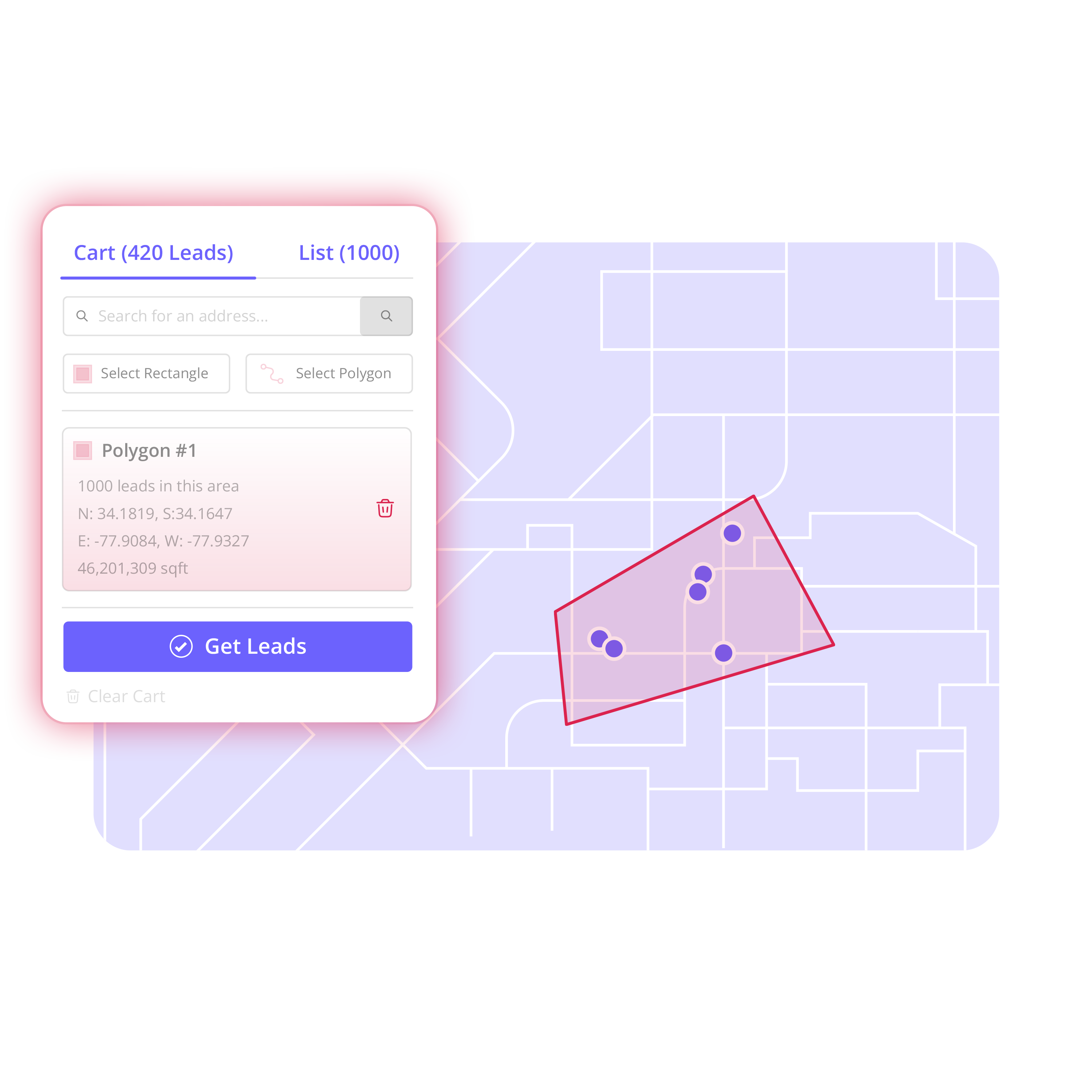
Territory by Top Interaction supports this workflow from map to campaign-ready list. Choose an area, find properties, add selected records to Contacts, enrich what matters, organize the work, and export clean CSV files into the CRM, canvassing platform, or outreach tools your team already uses.
When public records are not enough
Public ownership data is practical for prospecting, but it has limits. County updates can lag behind a sale. Entity ownership can require additional research. A deed may identify a trust or LLC without identifying the individual who makes decisions. Probate, divorce, foreclosure, and boundary issues add more complexity.
Treat those situations as routing decisions. If the record is uncertain but still relevant, place it in a review queue instead of assigning it as a standard field prospect. If your business needs legal certainty before making an offer, filing a notice, or closing a transaction, use a title company or qualified real estate attorney.
The same principle applies after you verify a record. Ownership can change, particularly in fast-moving markets. For recurring campaigns, set a refresh point before reusing an older list. A storm-response list built last season should not automatically become this season's calling list.
A practical standard for clean campaigns
For most local sales teams, a verified property record should answer a few operational questions: Is this the correct address? Is it inside the territory? Who is listed as the owner or ownership entity? Is the record current enough for this campaign? Does it need a different route, message, or review step?
That standard keeps the work focused. You do not need to investigate every parcel like a closing attorney. You do need enough clarity to avoid sending reps into overlapping territories, mailing the wrong household, or treating uncertain data as fact.
Build ownership checks into list creation, not after the campaign is already assigned. The result is cleaner territory control, less spreadsheet cleanup, and a more useful next step for every property your team chooses to work.