
A new roof goes on in a neighborhood, and the opportunity is obvious: work the surrounding streets while the job is fresh. Too often, the team responds by buying a broad list, handing it to several reps, and hoping activity turns into booked inspections. That is how roofing companies waste marketing dollars - not because neighborhood marketing does not work, but because the territory, data, and ownership are poorly organized before outreach begins.
Marketing waste is rarely one dramatic mistake. It is the accumulated cost of mailing homes outside the real target area, enriching records nobody will work, paying for duplicate contacts, and sending sales reps into overlapping territories. The practical fix is to start with the neighborhood and build a campaign around a defined area your team can actually execute.
How Roofing Companies Waste Marketing Dollars Before Outreach
The biggest drain often happens before the first door is knocked, call is made, or mail piece is sent. A campaign may look active on a dashboard while the underlying list is unfocused, outdated, duplicated, or assigned without a clear plan.
Buying broad lists instead of choosing a territory
Purchased lists can be useful for certain campaigns, but they become expensive when they force the team to sort out geography after the fact. A list based on a wide ZIP code may include subdivisions your crews do not serve well, streets far from the job that sparked the campaign, or properties that do not fit the offer.
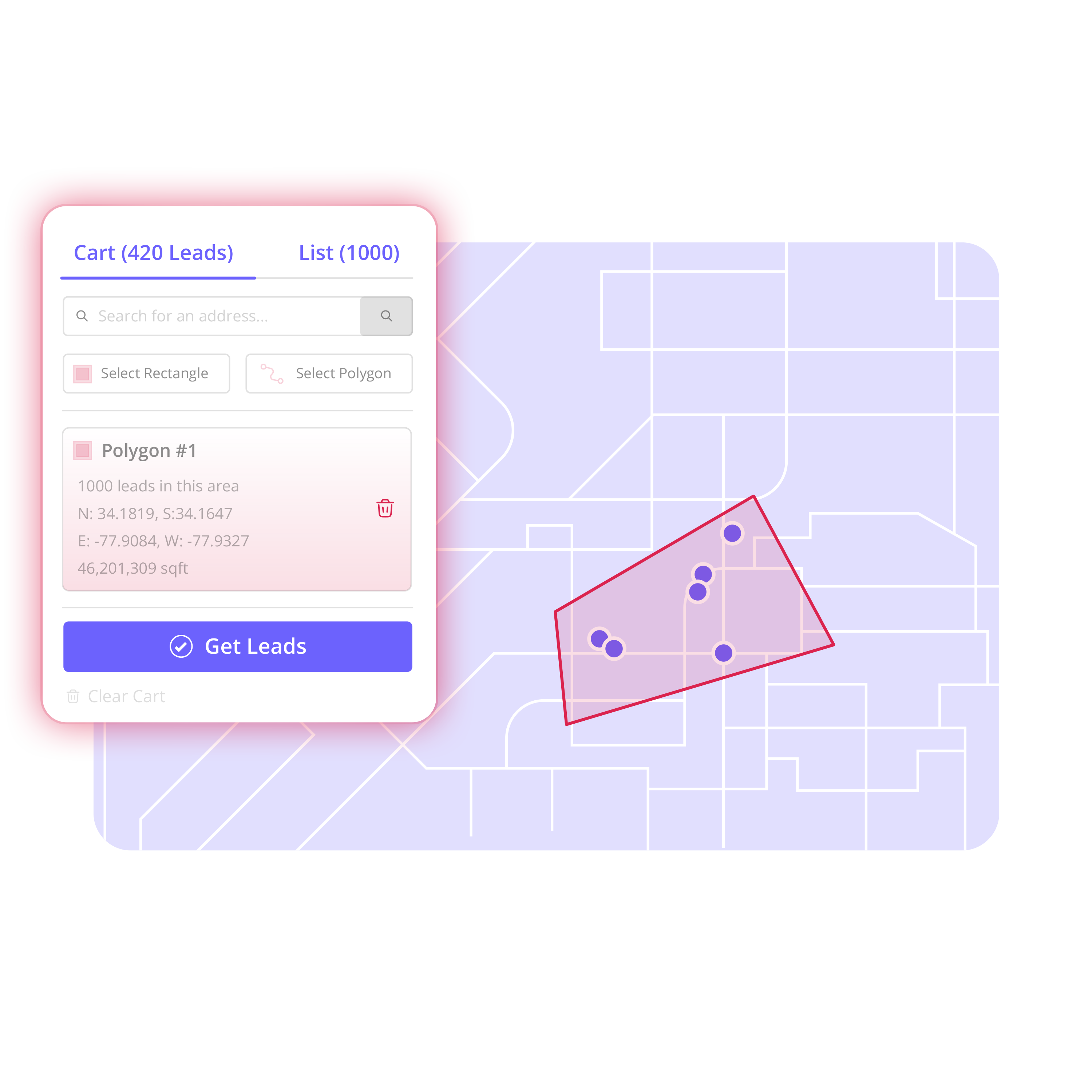
A better starting point is the map. Choose the completed-job area, a storm-affected pocket, or a neighborhood where the company wants more visibility. Draw the exact streets or boundaries the team intends to work. Then find the available properties inside that area.
This changes the conversation from, “Who can we market to?” to, “This is where we are going to prospect.” That level of control matters when a roofing company has limited canvassing capacity, a direct-mail budget, or several reps who need clear boundaries.
Paying to enrich records that will never be used
Contact information has a cost, whether it comes through a data provider, list purchase, staff research time, or a combination of all three. Companies burn budget when they enrich every property in a large market and only work a small percentage of it.
Build the territory first. Enrich what matters. Select the properties that fit the campaign, create an organized Audience, and add available homeowner or property-owner contact information only for the records your team plans to pursue. A tight, workable list is more useful than a massive file waiting for cleanup.
This is also where campaign type matters. A door-knocking team may need a property list and clear assignment first. A direct-mail campaign may need mailing details for a defined set of homes. An outbound team may need selected contact information for a smaller group. The right data depends on the channel, but the territory should come first in every case.
Letting reps work the same streets
Territory overlap is expensive because it creates confusion for both the team and the homeowner. One rep may knock a door that another rep already visited. A homeowner may receive multiple calls or mail pieces without any coordination. Managers then have to spend time figuring out who owns the prospect and what has already happened.
This is not only a sales-management issue. It is a marketing-cost issue. Every duplicate touch consumes time, data, printing, postage, or advertising spend.
Before launch, assign the prospect list or divide it into clear Audiences by rep, neighborhood section, or campaign. Record statuses, notes, and activity as work happens. Territory is not meant to replace a full CRM, but it gives a geographically driven team a practical place to organize the list it is working and see existing contacts on the map.
Treating every neighborhood like the same campaign
A completed roof in a dense subdivision is different from a storm-response area spread across several towns. An older neighborhood with visible roof age may call for one approach. A high-value neighborhood near a recent project may call for a more selective campaign. The same list size, message, and team structure will not fit every situation.
Roofing companies also lose money when they keep repeating last season's targeting without checking whether it matches current capacity. If crews are booked far out, the next campaign may need to focus closer to existing jobs. If a sales team has open capacity, it may make sense to define a larger expansion area. Marketing should follow operational reality, not run separately from it.
Replace List-First Marketing With a Territory-First Workflow
The practical alternative is simple: choose the area, build the list, and organize it before spending on outreach. This keeps the campaign tied to a place your company has chosen deliberately.
1. Start with the neighborhood
Use a recent roofing job as the starting point. Locate the property on a map and look at the surrounding streets. Decide how far the campaign should extend based on the neighborhood layout, team capacity, service area, and goal.
A compact subdivision may be a strong fit for a tightly drawn polygon. A more irregular market may require selecting several blocks while excluding streets that do not make sense. The point is not to create the largest possible area. It is to define an area the team can own.
For storm response, start with the part of the market where your team can realistically follow up, inspect, and serve. Broad storm coverage can look attractive, but a smaller, well-organized territory is often easier to execute than a scattered countywide list.
2. Select properties and create an Audience
Once the area is defined, select the available properties inside it and create an Audience for the campaign. Name it clearly enough that anyone on the team understands the purpose, such as “Maple Ridge - June Job Radius” or “Northside Storm Area - Rep Assignments.”
This step prevents the familiar spreadsheet problem where a file is copied, renamed three times, emailed around, and no one knows which version is current. An Audience gives the campaign a clear container before it moves into outreach tools or a larger sales system.
3. Enrich only the records worth pursuing
Do not treat enrichment as a bulk checkbox. Review the selected properties and enrich the records that support the campaign you are actually running. Available contact details can help your team organize outreach, but availability does not mean a person has requested contact or provided marketing consent. Follow applicable calling, texting, email, and direct-mail requirements for your outreach channel.
Selective enrichment also makes it easier to manage budget. If the campaign needs 150 prioritized properties, prepare those 150 rather than paying to build a contact file for thousands of homes that may sit untouched.
4. Organize ownership before the field starts moving
Assign prospects to reps or separate the Audience into clean working segments. Define who owns follow-up from doors, calls, referrals, inspections, or direct-mail responses. Add notes and statuses so the next person can see what happened without asking around.
For a two-to-20-rep roofing organization, this basic discipline can remove a surprising amount of daily friction. Managers stop reconciling duplicate sheets. Reps stop guessing where their boundary ends. Marketing can see which records were actually handed off for work.
5. Export a campaign-ready list
When the list is ready, export it into the sales, mail, calling, or outreach process your company already uses. The goal is not to force every workflow into one platform. The goal is to move from map to prospect list without unnecessary spreadsheet cleanup.
Territory supports this exact workflow: search the map, draw an area, select leads, create an Audience, enrich selected records, organize the work, and export. Choose the area. Build the list.
Spend More Carefully Without Shrinking Your Pipeline
Controlling marketing waste does not mean avoiding prospecting or making every campaign smaller. It means making each campaign more intentional. A company may still work a large storm area, mail thousands of homes, or run multiple neighborhood teams. The difference is that each action begins with a visible territory, a defined list, and clear ownership.
Watch for the warning signs: reps working from different versions of a list, broad purchases with no defined deployment plan, records enriched months before anyone contacts them, and job-site opportunities that disappear because nobody organized the surrounding homes. Each one points to a process problem, not a lack-of-leads problem.
Your next roofing job can be more than a completed project. Start with the neighborhood around it, build the list your team can work, and give every prospect a clear place in the campaign.