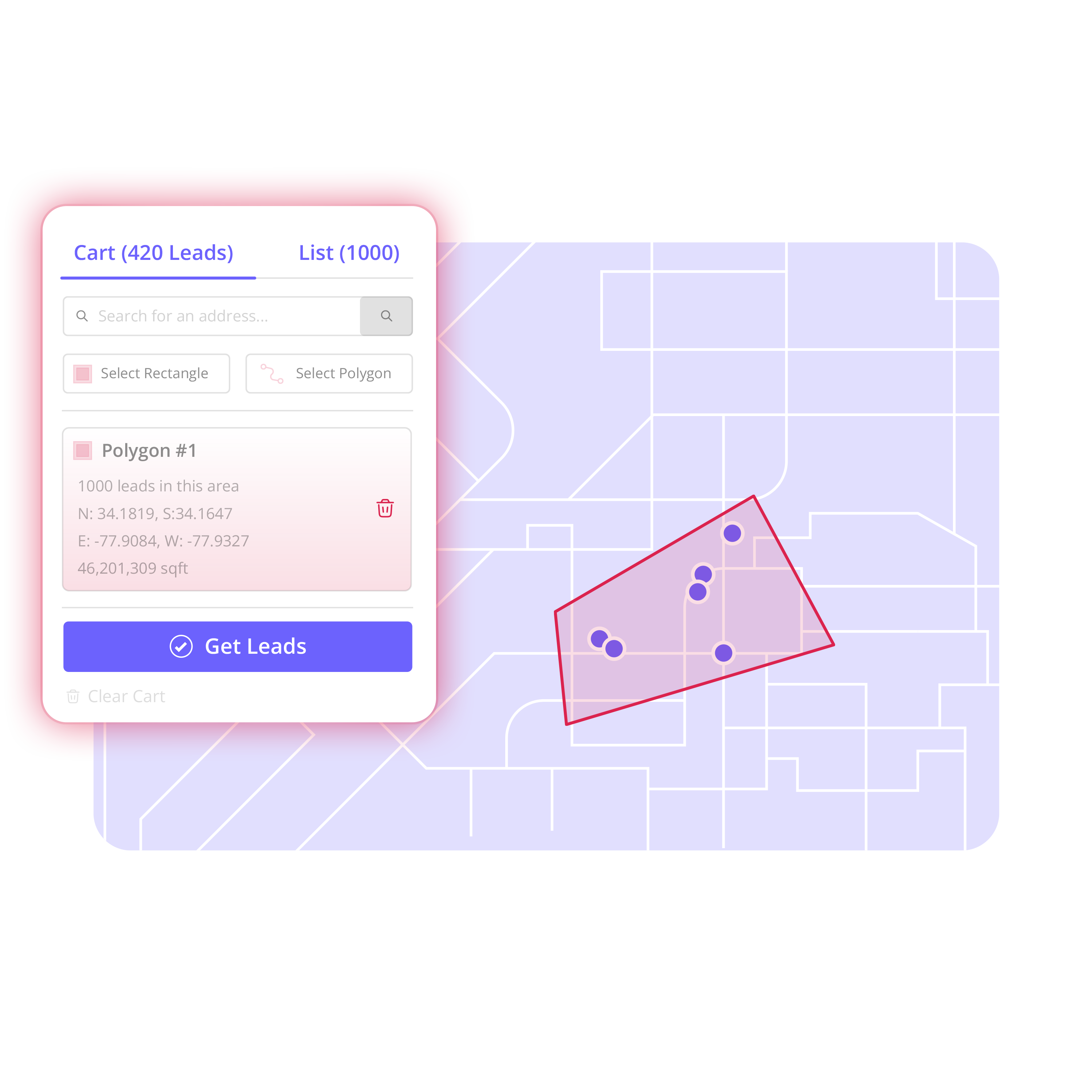

A map does not become a campaign just because it has pins on it. Your team still needs a clear list of properties, the right records selected for follow-up, and usable details for the outreach method you plan to run. Contact enrichment is the step that adds available homeowner and contact information to the records you have decided are worth pursuing.
For local sales teams, that distinction matters. You do not need to enrich every property in a ZIP code just because it appears on a map. Choose the area. Find the properties. Build the list. Then enrich the records that fit the campaign.
What Contact Enrichment Means in a Territory Workflow
Contact enrichment adds available information to a property or prospect record. Depending on the record and available data, that may include homeowner details, mailing information, phone numbers, or email addresses. The purpose is not to create a random list of names. It is to make a territory-based list more usable for the next step in your sales process.
A roofing company may start with homes surrounding a recent job site. A solar canvassing manager may draw the streets assigned to a team. An investor may search an acquisition area and filter for a specific property profile. In each case, the map defines the opportunity first. Enrichment supports the campaign after the team has chosen what to work.
That order avoids a common problem with purchased lists: a large file arrives before anyone has decided whether the records match the streets, neighborhoods, or service area the team actually wants to cover.
Why Selective Contact Enrichment Works Better
Enriching records selectively gives managers more control over cost, list quality, and team focus. It also keeps reps from sorting through records that were never part of the campaign plan.
If your team is running a door-knocking campaign, every address in a defined neighborhood may belong in the initial list. But you may only want to add available contact details to homes that meet a property filter, sit near an active job, or remain unworked after the first pass. For direct mail, you may focus on mailing information for a narrower segment. For outbound calling, you may enrich only the records assigned to a specific rep or board stage.
The right approach depends on the outreach motion. More data is not always better data if it creates extra cleanup, duplicate work, or unclear ownership.
Selective enrichment also helps keep the campaign process practical. Instead of exporting a raw property file and asking someone to clean it up in a spreadsheet, your team can decide what belongs in the list before it moves downstream.
From Map to Campaign-Ready Contact List
The simplest workflow is geographic first and contact second. Territory by Top Interaction follows that sequence so teams can turn a specific area into a list they can organize and use.
1. Choose the area your team will actually prospect
Start with the market, neighborhood, service area, ZIP code, job-site radius, or custom boundary that matches the campaign. Draw the exact streets your crew plans to cover instead of relying on broad geography that includes areas no one intends to work.
This is especially useful when territory lines matter. A canvassing manager can assign one side of a neighborhood to one team and reserve the next section for another. A roofing owner can isolate streets around completed projects. An HVAC company can build a campaign around a service-area expansion without mixing in addresses outside its current coverage.
2. Find the properties inside that boundary
Once the area is set, identify the properties within it. This creates the working pool for the campaign, not an abstract market estimate.
At this stage, managers should ask operational questions. Are these residential properties? Has this area already been worked? Are there existing customers, active leads, or exclusions that should be removed? Does the team have enough capacity to cover the full area this week?
A smaller, clearly defined territory often produces a cleaner campaign than a large area nobody can fully execute.
3. Build the list before adding contact details
Add the records that fit the campaign to Contacts. This creates a controlled prospect list rather than a collection of map results.
For example, a solar manager might build a list of 300 homes across several adjacent streets, then tag the records by turf and assign them to a canvassing team. A real estate acquisitions team might save only properties that meet its criteria, then organize them by market and status before deciding which records need additional contact information.
This step makes ownership visible. Your team can see which records are new, assigned, worked, qualified, or ready for the next action.
4. Enrich the records that matter
Now add available homeowner and contact information to the selected records. This is where contact enrichment becomes useful rather than excessive.
Choose records based on campaign intent. Enrich a priority segment before a calling block. Add mailing details for a direct-mail drop. Enrich unworked properties after a rep completes a door-knocking route. Keep the enrichment scope tied to an action your team plans to take.
Available information can vary by record. Teams should treat enrichment as supporting data, not a guarantee that every field will be present, current, or appropriate for every outreach channel. Review your own data practices, suppression processes, and applicable calling, texting, email, and privacy requirements before contacting anyone. Available contact information does not itself create permission to contact a person.
5. Organize the campaign for execution
An enriched record is only useful if your team can find it, understand it, and act on it. Use lists, tags, filters, statuses, and boards to organize prospects around the real workflow.
A roofing campaign might use tags for "storm area," "near completed job," and "mail follow-up." A home-service team may filter by service area and status so reps only see records assigned to their route. An investor may move contacts through stages such as review, outreach, follow-up, and closed.
Clear organization reduces overlap. It also gives managers a better view of what has been worked versus what is simply sitting in a file.
6. Export clean data into the tools you already use
The final step is not to force the team into another system. Export the list into the CRM, direct-mail platform, canvassing tool, dialer, or sales process you already use.
Because the territory, record selection, and enrichment choices happened before export, the file is easier to work with. It has a defined purpose. It reflects the area your team chose. It can be filtered or assigned before it reaches the people responsible for outreach.
Practical Contact Enrichment Scenarios
A roofing company responding after a storm does not need every homeowner in an entire metro area. It needs a defined set of neighborhoods, a way to exclude streets already covered, and a campaign list that supports door knocking, direct mail, or follow-up calls. Draw the area, build the property list, enrich the priority records, and organize the work by rep or route.
For a solar team, the campaign may begin with a tight canvassing turf. The manager can draw the boundary, identify homes within it, and assign records to a crew. After the first pass, the team can enrich selected prospects for compliant follow-up rather than adding contact information across the full territory before anyone has knocked a door.
For an HVAC company expanding into nearby neighborhoods, the goal may be steady coverage rather than a one-time event. Build separate lists by service area, tag priority segments, and enrich records as campaigns are scheduled. This keeps seasonal promotions and technician availability connected to the areas the company can actually serve.
For real estate investors, geographic precision can prevent wasted review time. Build an acquisition zone around the streets, subdivisions, or markets that fit the buy box. Add the properties that match the target profile. Then enrich the records your acquisition team is ready to evaluate and contact.
The Operational Mistakes to Avoid
The biggest mistake is treating contact enrichment as the first step instead of the fourth. When teams start with a large batch of contact data, they often spend time sorting records that do not match their territory plan.
Another mistake is exporting too early. A raw export may look productive, but it pushes cleanup into spreadsheets and makes it harder to track who owns each record. Build the list, organize it, and add the details your campaign needs before passing it to the next tool.
Finally, avoid assigning overlapping geography without clear rules. If two reps can claim the same address, contact details will not solve the underlying process problem. Define the territory, assign the work, and keep statuses current.
The practical value of contact enrichment is not having more fields in a file. It is giving the right people usable information after you have chosen a territory worth working. Start with the streets your team can cover, build a list with clear ownership, and enrich only when there is a real next action behind it.