
A completed roof should not be the end of a sale. It should give your team a clear place to start the next campaign. The best roofing lead generation tools help you create that next opportunity from several angles: capture active demand, identify local prospecting areas, track storm activity, manage referrals, and keep sales ownership clear.
The right stack depends on how your company wins work. A roofer relying on Google searches needs different tools than a team that canvasses neighborhoods after every completed job. Most growing roofing companies need both: a way to capture inbound opportunities and a practical system for building outbound campaigns where they want to sell.
What Makes a Roofing Lead Tool Worth Using?
A useful tool should remove a real bottleneck. It might help you find homeowners searching for roof repair, see where hail may have created demand, or turn a set of surrounding streets into an organized list for your sales team.
Before adding another subscription, ask a direct question: what step is slowing us down? If your reps are waiting on inbound calls, you need more demand capture. If they are driving around after a job and building lists in spreadsheets, you need better geographic prospecting. If leads are falling through cracks after assignment, you need cleaner organization and follow-up.
Avoid judging every platform by the same standard. An inbound marketplace is not designed to build a neighborhood list. A map-based prospecting platform is not designed to replace estimating or job management. Choose tools for the job they actually need to do.
7 Best Roofing Lead Generation Tools by Use Case
1. Google Local Services Ads for active search demand
Google Local Services Ads can put a roofing company in front of homeowners actively looking for help in their area. For companies that need near-term inbound opportunities, this is often one of the clearest places to test paid demand generation.
The trade-off is control. You are competing for attention in a paid channel, lead volume can vary by market and weather conditions, and your office must respond quickly when inquiries arrive. It works best when someone owns intake, qualification, and follow-up instead of treating it as a set-it-and-forget-it campaign.
2. Google Business Profile for local visibility and reviews
A well-maintained Google Business Profile supports local search visibility and gives prospective customers a place to evaluate your company before calling. Accurate service areas, current photos, clear categories, regular updates, and a steady review process all matter.
This is not a fast replacement for prospecting. It is a long-term local credibility tool. Still, it belongs in nearly every roofing lead generation plan because homeowners often search for proof that a contractor is established, responsive, and active in their community.
3. Lead marketplaces for filling calendar gaps
Marketplaces such as Angi and Thumbtack can help some roofing companies create opportunities when their own pipeline is light. They are especially worth testing when a team needs more inbound conversations in a specific service area or during a slower season.
The economics require attention. Marketplace leads may also be available to other contractors, and your team may spend time sorting through requests that do not fit your ideal job size, location, or service type. Set a budget, define who qualifies each inquiry, and review results by source rather than assuming every lead source performs the same.
4. Map-first prospecting tools for neighborhood campaigns
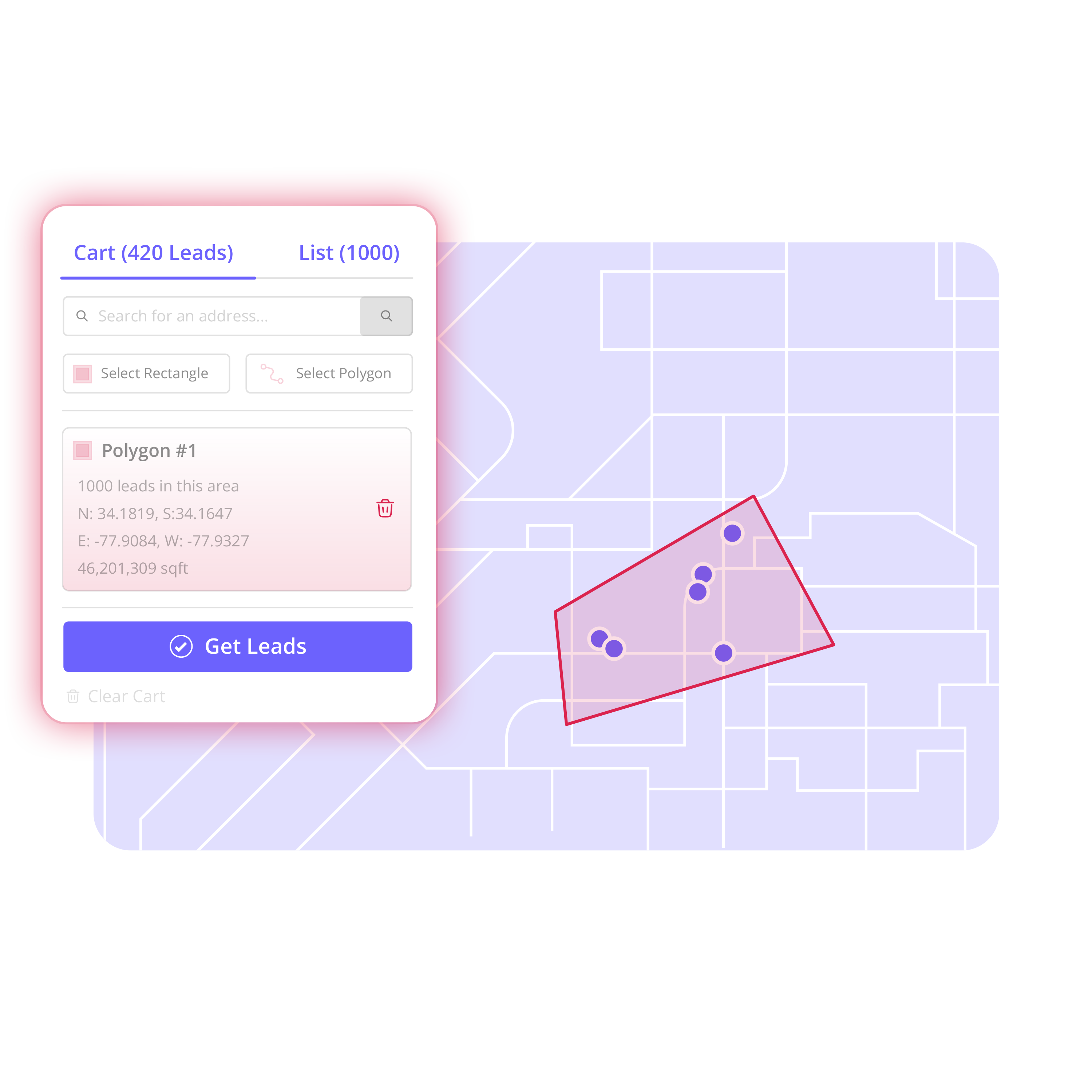
When your team has just completed a roof, responded to a storm, or wants to expand into a nearby market, start with the neighborhood. A map-first prospecting tool helps you choose the streets, find the available properties, and build the list your reps will work.
Territory is built for this workflow: search the map, draw the area, select properties, create an Audience, enrich the records that matter, organize the prospects, and export campaign-ready data. That gives a roofing team a practical way to turn its last roofing job into its next neighborhood campaign without starting from a raw purchased list.
This approach is not about assuming every property needs a roof or has requested contact. It is about choosing where to prospect with intention. Build the territory first. Enrich what matters. Then assign the list to reps, use it for compliant outreach, or move it into the systems your team already uses.
5. Storm intelligence platforms for timing and location context
Storm intelligence tools help roofing teams monitor weather events and identify areas that may deserve attention. They can be useful for planning where to send representatives, where to focus local advertising, and where to begin a new prospecting effort after significant weather.
Storm data is context, not a finished campaign. A hail event may point your team toward a market, but you still need defined streets, an organized property list, assigned ownership, and a clear follow-up plan. The strongest workflow connects storm awareness to disciplined local execution rather than sending everyone into a broad area with no list or accountability.
6. Roofing CRM and job management platforms for lead follow-through
Platforms such as JobNimbus and AccuLynx can help roofing companies track opportunities after they enter the pipeline. Depending on your setup, they may support lead records, tasks, job details, documents, estimates, and sales process visibility.
These systems are valuable once a lead is in motion. But they do not always solve the earlier question: exactly which homes should our team prospect next? If your sales manager is still exporting data, removing duplicates, and drawing territory boundaries by hand before a campaign begins, pair your operating system with a more focused way to build geographic lists.
7. Referral and review tools for staying visible after the job
Past customers are one of the few audiences that already know your work. Review requests, referral reminders, and post-job communication tools can help keep your company present when a neighbor asks who installed a roof down the street.
The timing matters. Ask for a review after the customer has had a good experience, and make referral follow-up easy for your team to manage. Do not treat this as passive marketing. Assign someone to monitor new reviews, respond professionally, record referral sources, and thank customers appropriately.
Build a Roofing Lead System, Not a Random Tool Stack
The strongest roofing teams usually combine a few channels instead of betting everything on one source. Inbound tools capture homeowners who are already looking. Referral systems create repeat local visibility. Storm intelligence helps identify markets worth attention. Geographic prospecting gives your team a way to create focused campaigns when they need more control over where they work.
A simple operating model looks like this:
- Capture inbound demand from search, local visibility, and selected marketplaces.
- Watch completed jobs, storm activity, and expansion areas for neighborhood opportunities.
- Draw the exact streets your team wants to work and build an organized prospect list.
- Assign ownership before reps begin outreach so territories do not overlap.
- Track source, status, notes, and activity so managers can see what is actually happening.
The tools matter, but the handoff between them matters more. A promising neighborhood campaign loses value when the list sits in a spreadsheet. An inbound call loses value when nobody follows up. A referral loses value when the source is never recorded.
How to Choose the Right Mix for Your Roofing Company
Start with your current constraint. If you have more sales capacity than appointments, test demand-generation channels and improve speed to lead. If you have completed jobs in good neighborhoods but no process for working around them, prioritize geographic prospecting. If your reps have plenty of names but unclear ownership and inconsistent follow-up, tighten organization before buying more lead volume.
Also consider your sales motion. A company that sells retail roof replacements may prioritize local search, reviews, and neighborhood saturation. A storm-focused operation may place more weight on weather intelligence and fast campaign setup. A commercial roofer may need account research and property-owner targeting rather than homeowner-focused channels.
Measure each source using the same operational questions: Can we identify where the lead came from? Can we assign it quickly? Can the team work it without manual cleanup? Can a manager see its status? These questions reveal more than a vendor demo ever will.
Choose the area. Build the list. Then make sure every rep knows who owns the next action. That is how a roofing lead tool becomes a working campaign instead of another tab your team forgets to open.