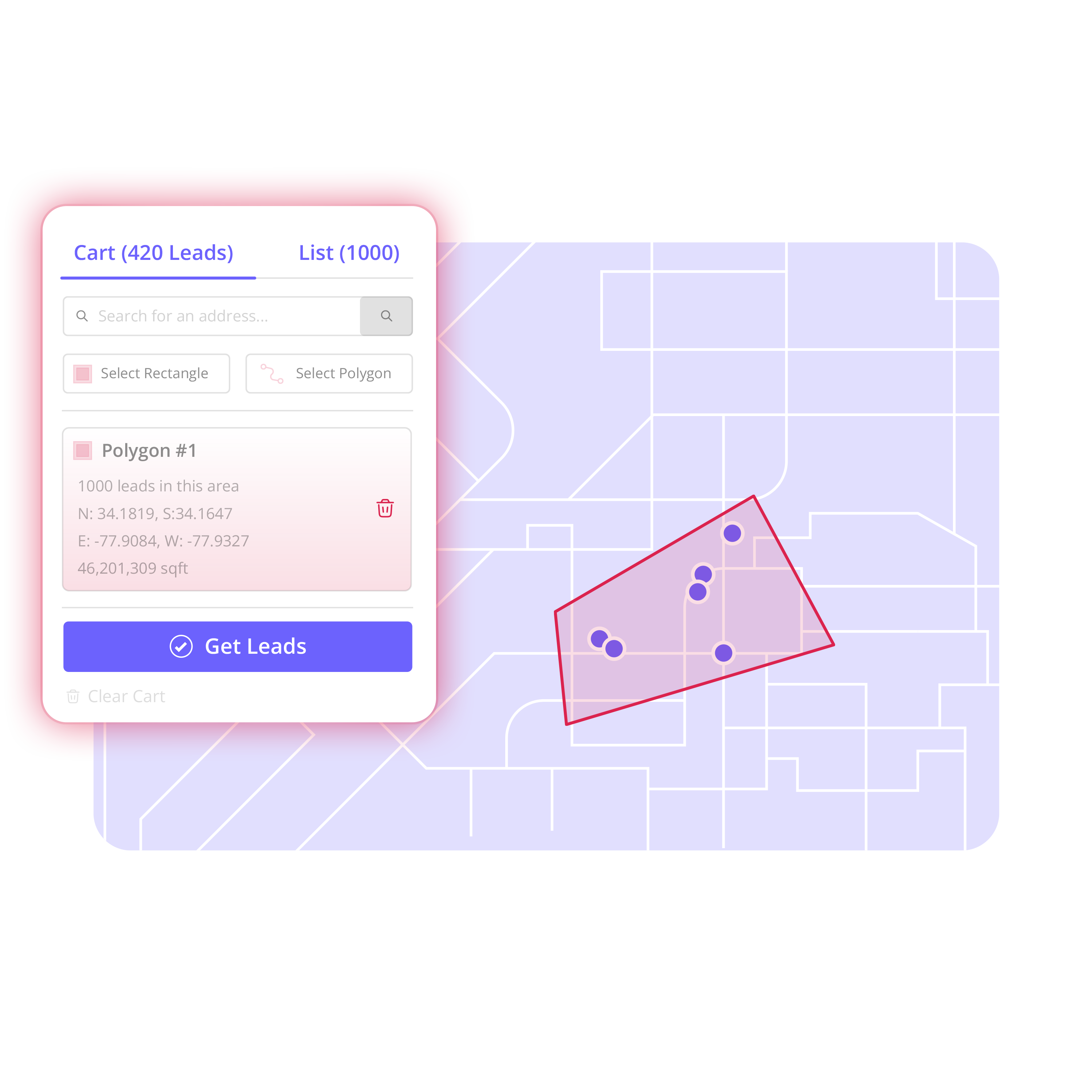

A completed roof is more than a job-site sign. It is a visible proof point in a neighborhood where homeowners often share similar roof ages, weather exposure, home values, and concerns. Finished a roof? Prospect the 100-500 homes around it - but do it with a defined territory, a clean list, and clear ownership. Randomly knocking nearby streets wastes a good opportunity. A focused campaign turns that recent job into an area your team can actually work.
Why the homes around a completed roof matter
Neighbors notice roofing work. They see the dumpsters, crews, materials, and the finished result. Some will ask the homeowner who did the work. Others may not be ready today, but they now have a local contractor in mind when leaks, missing shingles, or insurance questions appear.
The bigger opportunity is often property similarity. Homes in the same development may have been built within a few years of each other. They may have the same original roof material, face the same wind patterns, or have been through the same hail event. That does not mean every nearby home needs a roof. It means the area gives your team a rational place to start.
The right radius depends on density and job type. In a tight subdivision, 100 homes may cover a few connected streets and create a strong initial canvassing route. In a rural or spread-out market, you may need 300 to 500 homes to build a usable campaign. Start with an area your team can work consistently, not a circle so large that the job-site connection gets diluted.
Finished a roof? Prospect 100-500 homes with a real boundary
Do not hand a rep an address and tell them to work nearby. Define what nearby means before anyone starts knocking doors, calling, mailing, or assigning follow-up.
1. Choose the territory based on how your team will work it
Start from the completed roof address. Then look at the streets, subdivision lines, major roads, gated entries, and natural stopping points around it. A four-lane road, drainage canal, or commercial strip may split what looks like one neighborhood into two different campaigns.
Draw the exact streets or neighborhood your team wants to prospect. The goal is not to create the largest possible list. The goal is to create a territory that a rep, canvassing crew, or local outreach campaign can finish and revisit.
For door-to-door teams, use walking logic. Keep blocks connected and avoid forcing reps to cross unsafe or inefficient routes. For direct mail, you can include a somewhat wider group of comparable homes. For phone outreach, focus first on the records your team can responsibly prioritize and contact in accordance with applicable laws and your company policies.
A roof completed after a storm can justify a wider territory than a standard retail replacement. If the job resulted from a localized hail path, build around the affected streets rather than relying only on a simple radius. If it is a premium roof in a high-value neighborhood, tighter targeting may make more sense than volume.
2. Find the properties, then remove the distractions
Once the boundary is set, pull the properties inside it. This is where most teams lose time with map screenshots, exported addresses, and spreadsheets that need cleanup before anyone can use them.
Review the area before building the final list. Remove commercial buildings, vacant parcels, duplicate records, and streets that are not part of the campaign. If you know a section is already assigned to another rep or has been worked recently, exclude it now. Clean territory decisions at the beginning prevent overlapping effort later.
This is also the time to separate the first pass from the full opportunity. You may identify 430 properties in the boundary but decide that 150 homes closest to the completed job should receive the first door-knocking sequence. Keep the other records organized as a second wave instead of dumping every address into one unmanageable assignment.
3. Build a list that carries the job-site context
A nearby-home campaign should never become a generic homeowner list. The completed project is the reason for the campaign, so keep that context attached to the records.
Name the list clearly. For example: “Maple Ridge - Completed Roof - October 2026.” Add a tag for the neighborhood, the job type, and the sales motion, such as canvass, mail, or follow-up. If the job was insurance-related or storm-related, record that context accurately without making assumptions about any neighbor’s damage or coverage.
Clear naming matters when your company has multiple projects in the same market. Six months from now, a manager should be able to see which properties were selected because of the Maple Ridge job, who worked them, and what happened next. That is hard to reconstruct from a spreadsheet named “new leads final v3.”
Enrich selected records, not every property
Property addresses are enough to begin some campaigns, especially door knocking and neighborhood mail. Available homeowner and contact information can help with follow-up, but enrichment should be deliberate.
Choose the records worth pursuing first. A crew may identify houses with aging shingles, visible wear, or homeowner conversations from the first pass. A sales manager may want to enrich the 75 records closest to the completed roof before assigning phone follow-up. This keeps spending and data handling tied to an actual campaign decision.
Available contact data is not permission to contact someone. Your team still needs to follow applicable telemarketing, email, privacy, solicitation, and local outreach rules. The operational point is simple: enrich what your team intends to work, then keep the records organized around the approved outreach process.
Assign ownership before the campaign starts
The fastest way to waste a strong neighborhood opportunity is to let multiple people work the same homes without visibility. One rep knocks a door, another sends a mail piece, and a third calls without knowing the homeowner already spoke with your company.
Assign the territory or segments of it to named people. Use statuses that reflect the work your team actually does: unworked, attempted, spoke with homeowner, inspection set, not interested, follow up later, and do not contact. Keep notes specific. “Roof is 8 years old, asked for spring follow-up” is useful. “Maybe” is not.
For larger territories, divide the list by logical street groups rather than arbitrary row counts. A rep should be able to see their area on a map and complete it without guessing where another rep stopped. Managers should be able to filter by owner and status to spot gaps, stalled follow-up, and duplicate activity.
Export into the systems your team already uses
Your territory-building tool should not force a new sales process. Build the geographic list, organize the selected records, and export a clean CSV into the CRM, canvassing platform, direct-mail system, or call workflow your team already runs.
Territory by Top Interaction supports this sequence: choose the area, find properties, build the list, enrich what matters, organize prospects, and export. That is useful because the map is only the starting point. The real output is a campaign-ready list with a defined boundary and an accountable next step.
Before exporting, check the basics: confirm the territory name, remove records that do not belong, verify ownership fields, and include the tags or notes your downstream system needs. A clean export avoids the familiar cleanup cycle where operations has to fix columns, deduplicate records, and figure out which rep owns what after the campaign has already started.
Measure the neighborhood, not just the first job
The completed roof may have been profitable on its own. The neighborhood campaign tells you whether the job can create additional pipeline in that market. Track activity by territory: doors worked, conversations, inspections set, follow-ups scheduled, and opportunities created. If you use mail or phone outreach, track the campaign source consistently so results can be tied back to the completed job area.
Do not judge the territory after one afternoon. Some nearby homeowners will act quickly because they have an active issue. Others may need a weather event, a future budget cycle, or a later follow-up. The value of a defined list is that your team knows exactly which homes were selected and can return to them without rebuilding the campaign from scratch.
A roof job gives your team a credible reason to focus locally. Draw the streets. Build the list. Assign the work. Then make sure every nearby home gets a clear next step instead of becoming another address lost in a spreadsheet.