
A service area can look busy on a map and still produce an empty pipeline. The best HVAC lead sources are the ones your team can work consistently, track clearly, and connect to a defined local market. That means balancing high-intent inbound demand with outbound prospecting you control.
For most HVAC companies, there is no single source that should carry the entire sales plan. A homeowner searching for emergency AC repair needs a different approach than a neighborhood with aging equipment, recent competitor activity, or a concentration of homes your team can serve efficiently. Build a mix, then give every source a clear owner, process, and follow-up standard.
The best HVAC lead sources depend on the job you want
Start with the work you want more of. Emergency repairs, maintenance memberships, system replacements, indoor air quality upgrades, and commercial service agreements do not come from the same places at the same pace.
Search-driven leads are often valuable for urgent repairs because the customer already has a problem and is looking for help. Neighborhood outreach and direct mail may fit replacement campaigns better, especially when you know an area has older housing stock or your team has just completed a nearby install. Referral and partner channels can produce strong opportunities, but they require ongoing relationship work rather than a one-time campaign.
The practical question is not simply, “Where can we get leads?” Ask: “Where do we want to sell next, and what offer makes sense there?” That decision keeps your marketing spend, rep assignments, and follow-up activity pointed in the same direction.
1. Local search and your Google Business Profile
Local search is a core HVAC lead source because homeowners use it when the need is immediate. Someone with a furnace failure, refrigerant issue, or broken thermostat may be ready to call that day. Your website, service pages, reviews, business profile, accurate hours, and fast call handling all affect what happens after that search.
This source is strongest for repair demand and urgent service. It can also support replacement work when your pages clearly explain financing options, system types, installation service areas, and maintenance plans.
The trade-off is that you do not choose when demand appears or exactly which neighborhood produces it. Local search is essential, but it is reactive. Use it alongside campaigns that let you choose the area first.
2. Existing customers, maintenance plans, and replacement follow-up
Your customer base is often the most overlooked source of HVAC opportunities. Past service calls tell you where your company already has trust, which systems are aging, and which homeowners may need seasonal maintenance or a replacement conversation.
This is not a reason to blast every prior contact with the same message. Segment the list. A homeowner who installed a new system last year needs different communication than a customer with repeated repairs on older equipment. Build a simple follow-up process around service history, maintenance timing, and any documented equipment concerns.
Keep ownership clear. One person or team should be responsible for working renewal, maintenance, and replacement follow-up so opportunities do not disappear between dispatch, technicians, and sales.
3. Referrals from customers and local partners
A good referral source compounds when your team makes it easy for people to recommend you. Satisfied customers, real estate agents, property managers, electricians, plumbers, restoration companies, and home inspectors can all encounter HVAC needs before the homeowner begins searching.
Partner referrals work best when the relationship is specific. Rather than asking a property manager to “send leads,” explain the situations you can help with: unit turnover inspections, emergency no-cool calls, preventive maintenance, replacement planning, or multi-property service coordination.
This channel takes time. It also depends on reliable service and fast communication. If a partner sends an opportunity and your team is slow to respond, the relationship weakens quickly. Track every referral source and make sure someone closes the loop after the job.
4. Paid search and local service advertising
Paid search can put your company in front of homeowners who are actively looking for HVAC help. It is especially useful when you need to add demand in a particular season, promote a defined service, or expand visibility in a market where organic placement is still developing.
The risk is paying for broad traffic that does not fit your capacity, service area, or preferred job type. Set geographic boundaries, use service-specific campaigns, and make sure the person answering calls knows how to qualify the work. A campaign for emergency repairs should not send callers through the same script as a replacement estimate request.
Measure more than form fills and calls. Track booked jobs, job type, location, and whether the work fits the campaign you intended to run. That gives you a cleaner view of which spend is supporting the business you want to build.
5. Neighborhood prospecting around completed jobs
A completed HVAC installation is a practical reason to start a local campaign. Your crew has already worked in the area. Nearby homeowners may have similar home ages, system types, or comfort issues. You also have a real example of work completed close by, without claiming that neighboring homes have the same need.
Start with the neighborhood. Choose the streets your team wants to work, identify the available properties, and build a focused prospect list. This is more useful than buying a broad list that includes areas your team does not plan to visit, mail, or call.
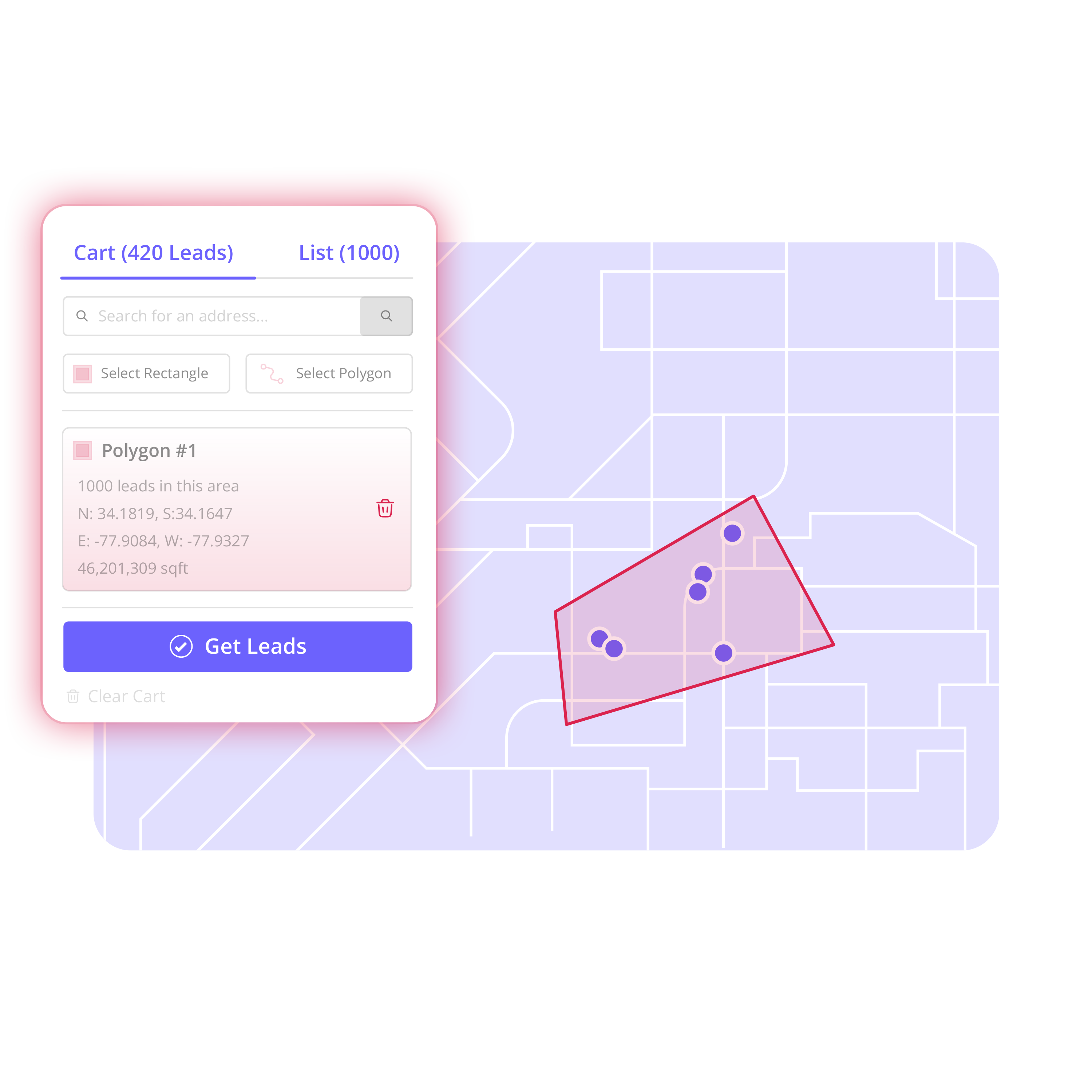
Territory supports this workflow from map to prospect list. Locate the completed job area, draw the streets you want to target, select the properties, create an Audience, and enrich only the records that matter. Then assign prospects to the appropriate rep or export the list into the outreach tools your team already uses.
Build the territory first. Enrich what matters. That approach reduces spreadsheet cleanup and gives sales managers a clear answer when they ask which homes are part of the campaign.
6. Direct mail tied to a defined service area
Direct mail is more useful when it supports a specific market decision. A replacement offer, tune-up reminder, seasonal maintenance message, or neighborhood installation campaign needs a defined audience, not just a large quantity of addresses.
Choose an area based on your actual plan. It may be a neighborhood around recent installs, an expansion market, a ZIP code with enough service capacity, or a group of properties near a technician’s existing workload. Build the property list, remove duplicates or existing contacts as needed, and coordinate mail timing with phone, email, and field outreach where appropriate.
Mail is rarely instant. Give it enough time and repeat exposure to work. It is also easier to evaluate when the campaign area is clean and known, rather than mixed into a citywide list with no geographic logic.
7. Property managers and commercial relationships
Property managers can become a steady source of service, turnover, and replacement opportunities. The sales cycle may be different from residential work, and the decision-maker may care more about response procedures, documentation, portfolio coverage, and predictable communication than a homeowner does.
Prospect deliberately. Choose the areas or property types that fit your operational capacity. Organize ownership and contact details carefully, assign accounts, and document activity so multiple team members do not contact the same company without context.
This is a relationship channel, not a quick lead purchase. It can be worthwhile for HVAC companies that have the service capacity and internal process to support recurring accounts.
Turn lead sources into a workable local campaign
The strongest HVAC lead plan combines intent with geographic control. Local search and paid advertising help capture demand when it appears. Customer follow-up and referrals build on trust you have already earned. Neighborhood prospecting, direct mail, and partner outreach let you create demand in areas you have chosen.
For outbound work, use a repeatable sequence: choose the area, find the properties, build the contact list, enrich selected records, organize prospects by campaign and owner, then export for outreach. Keep existing-contact overlays and rep assignments visible so the team avoids overlap.
Available contact information is not a request for contact or proof of marketing consent. Use every channel in line with applicable calling, texting, email, and direct-mail requirements, as well as your company’s own contact policies.
The goal is not to chase every possible HVAC lead source. Choose the sources that match your capacity and market, then turn each service area into an organized prospecting campaign your team can actually work.