
A solar team can lose a full week before the first door is knocked. The usual cause is not effort. It is weak solar canvassing territory planning: vague boundaries, overlapping reps, generic lists, and too much cleanup between the map and the campaign.
The better approach is straightforward. Choose the area. Find the properties. Build the list your team will actually work. Then organize ownership and move that list into the tools already used for canvassing, calling, direct mail, or CRM follow-up.
Start Solar Canvassing Territory Planning With a Real Market Decision
A territory is not just a ZIP code or a pin on a map. It is a specific set of streets your team can cover with a clear reason for being there. That reason might be a recent installation, a neighborhood with favorable roof conditions, an active referral area, a new market launch, or a serviceable pocket near an existing sales team.
Start by defining what makes the area worth working. If the objective is neighborhood saturation, draw around a completed installation and include the surrounding streets where social proof is strongest. If the objective is market expansion, set boundaries around a compact area your team can cover repeatedly instead of spreading reps across an entire city.
ZIP codes can be useful starting points, but they are rarely a finished territory. A ZIP may contain apartment-heavy blocks, commercial corridors, gated communities, or areas outside the practical driving range of your team. Draw the streets that match the campaign, not the broadest available boundary.
This decision also forces useful operational questions. How many doors can each rep reasonably work? Will the team revisit the area over several days? Are certain streets already assigned or recently worked? A manageable territory beats a large territory that no one owns.
Draw Boundaries That Match Field Coverage
Field teams need boundaries they can understand at a glance. Use recognizable roads, neighborhood entrances, natural breaks, and street clusters to shape the area. Avoid arbitrary boxes that force reps to cross busy roads or leave obvious gaps between streets.
A good boundary does three things: it gives a rep a clear work area, prevents duplicate effort, and makes results easier to review. When a manager can see exactly which streets were assigned, they can identify unworked pockets, adjust capacity, and plan the next pass without rebuilding the campaign from scratch.
The right territory size depends on your motion. A team running a one-day event may need a tight, dense neighborhood. A multi-rep campaign with several days of coverage can support a larger area, provided every section has an owner. Do not confuse more addresses with more opportunity. A smaller, well-worked list often produces better field execution than a massive list with unclear priorities.
Plan for overlap before it becomes a problem
Solar canvassing often involves multiple reps, appointment setters, closers, and partner teams working the same market. Without defined territory ownership, duplicate knocks and conflicting notes follow quickly.
Split larger areas into logical sections and assign them before outreach begins. Name territories consistently so everyone knows what they are looking at. For example, use a market, neighborhood, and date range rather than vague labels such as "New Leads" or "West Side." That makes it easier to filter records, track campaign progress, and keep old exports from being reused by mistake.
Find the Properties Inside the Boundary
Once the map is set, turn the territory into a property list. This is where planning becomes actionable. Rather than buying a broad list and trying to isolate the relevant records later, begin with the properties inside the exact streets you selected.
Review the resulting records with the campaign in mind. A canvassing list may need different priorities than a direct-mail list or a calling campaign. For door-to-door work, street order and geographic density matter. For a targeted follow-up effort, your team may care more about selected property or homeowner details available for review.
Keep the first pass focused. You do not need to research every record before the campaign starts. Build a usable property base, then identify the subset that deserves additional effort. This prevents the common mistake of paying for more data, exporting more fields, and creating more spreadsheet work than the team needs.
For a solar operation, property selection may also vary by market. In one neighborhood, a recent customer installation may be the reason to prospect nearby homes. In another, the priority may be a compact area that fits your route plan. The map provides the control. Your sales strategy determines which records move forward.
Build a Campaign List, Not Another Raw Spreadsheet
A property search becomes useful only when the team can work it. Add selected records to a campaign list and give that list a purpose, owner, and status structure.
At minimum, distinguish between records that are ready for outreach, records already assigned, and records that need review. Teams with a more developed process can also organize by neighborhood, rep, campaign type, outreach date, or follow-up stage. The goal is not to create an elaborate database. The goal is to prevent a list from becoming an untraceable export the moment it reaches the field.
This is also the point to remove obvious duplicates and exclude properties that should not be part of the campaign. Clean list-building at the start saves reps from wasted doors and managers from conflicting reports later.
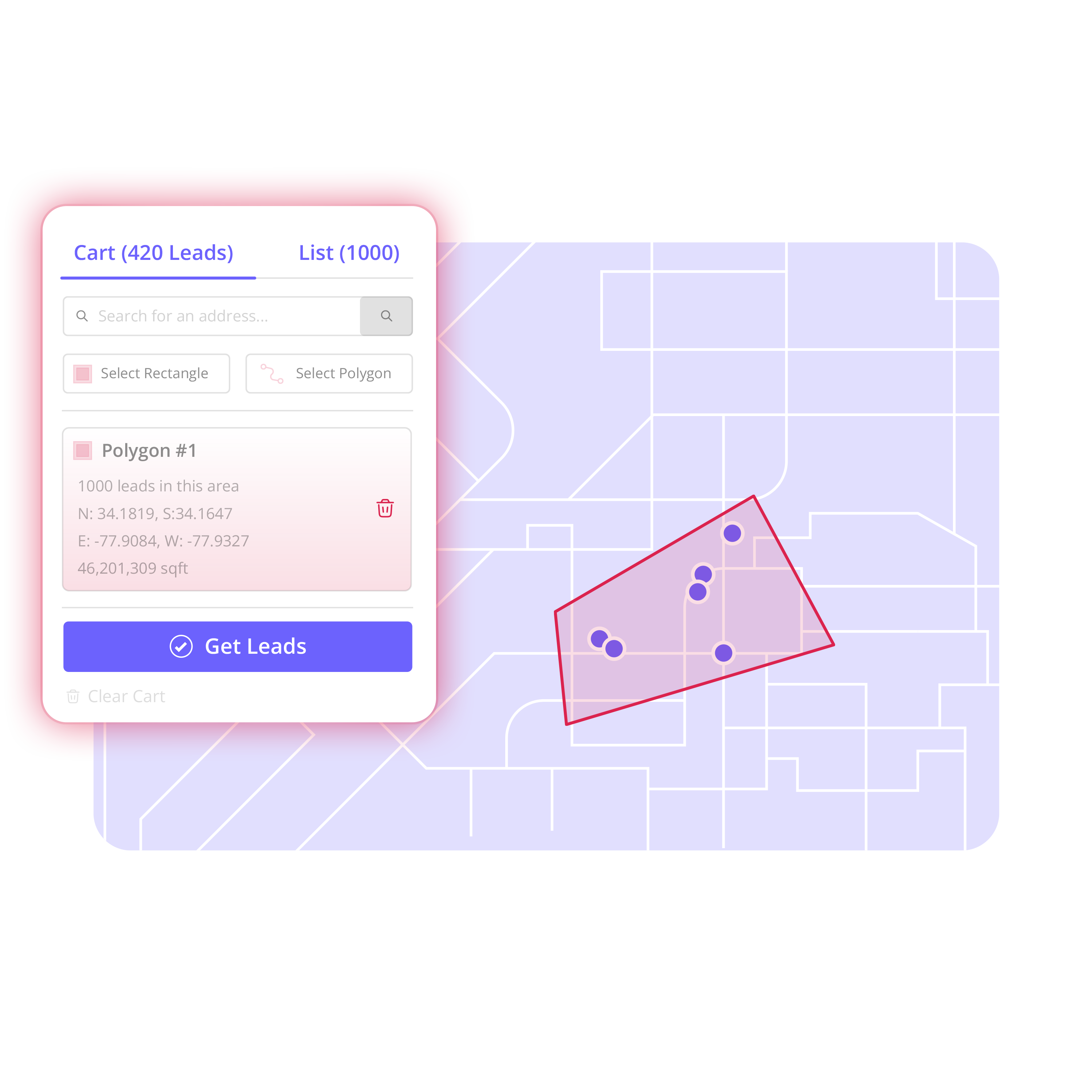
Territory by Top Interaction supports this workflow by helping teams draw the area, identify the properties within it, and add chosen records to organized contact lists. It acts as the campaign-list creation layer between your map and the sales tools your team already uses.
Enrich only the records that matter
Available homeowner and contact information can help a team prepare selected prospects for outreach. But enrichment should follow the territory decision, not replace it. Start with the area and properties your team intends to work, then add available information only where it supports a specific campaign.
That approach controls cost and keeps the list focused. It also avoids treating every available data point as a reason to contact someone. Your team remains responsible for following applicable laws, internal policies, and channel-specific requirements for calls, texts, email, direct mail, and door-to-door outreach.
Organize Solar Canvassing Territories for Clear Ownership
The campaign is not ready because the list exists. It is ready when each person knows what to do with it.
Assign records or territory sections to the right rep. Use tags, filters, statuses, or boards to separate new prospects from worked homes, follow-ups, appointments, and no-contact outcomes. Keep notes and disposition rules consistent enough that a manager can understand field activity without chasing down separate spreadsheets or text messages.
For example, a manager might create one neighborhood campaign and divide it into three rep sections. Each rep receives a filtered export for their streets. At the end of the day, the team updates outcomes in its normal canvassing or CRM process. The manager can then see which sections need a second pass and which streets should be excluded from future activity.
This structure matters most when campaigns repeat. Solar sales teams commonly return to the same neighborhoods after installations, referrals, seasonal offers, or staffing changes. If the original boundaries, records, and ownership are organized, the next campaign starts with a clear baseline instead of another round of list building.
Export Into the Tools Your Team Already Uses
Your territory planning tool does not need to replace your CRM, canvassing app, dialer, or direct-mail provider. It needs to produce a clean list that enters those systems without unnecessary reformatting.
Before export, check that the fields match the next step. A door-knocking platform may require address, street, city, ZIP, and rep assignment. A CRM import may need campaign labels and lead status. A direct-mail file may need a different layout. Export only the records and fields needed for that campaign.
This is a small discipline with a large operational payoff. Clean exports reduce import errors, lower duplicate risk, and make campaign reporting easier to trust. More importantly, reps receive a list that reflects the territory decision made at the beginning.
Review Results and Redraw the Next Pass
Solar canvassing territory planning improves when teams review execution, not just appointments. Look at how the area performed in the field. Were certain streets skipped because the boundary was awkward? Did one rep receive too many properties? Did recent installs create stronger conversations on nearby blocks? Were there areas where records were already worked by another team?
Use those answers to redraw the next territory. Expand from streets with strong activity, tighten areas that are difficult to cover, and preserve clear exclusions. Over time, your map becomes a working record of where the team has prospecting history and where the next campaign should begin.
The useful closing question is simple: can a rep look at this territory and know exactly which properties they own, why they are working them, and what happens after the conversation? If the answer is yes, the plan is ready for the field.