
A roofing manager sees three recent jobs within six blocks. A solar team gets access to a new neighborhood. An investor identifies a pocket of homes that fits a buy box. The opportunity is clear. The usual delay is turning that area into a clean, assigned list the team can actually work.
Homeowner prospecting software should solve that operational problem. It should help you choose where to prospect, identify the properties inside the boundary, build a focused list, and move it into the outreach process you already use. It should not force your team to begin with a generic list, guess which records fall inside a territory, or spend hours cleaning spreadsheets.
For territory-based sales teams, the map is the starting point. The campaign-ready list is the output.
What homeowner prospecting software should do
The best homeowner prospecting software gives local sales organizations geographic control before it gives them more records. That distinction matters. A large list is not necessarily useful if it includes streets outside a rep's assignment, properties your team cannot service, duplicate records, or homeowners who do not match the campaign.
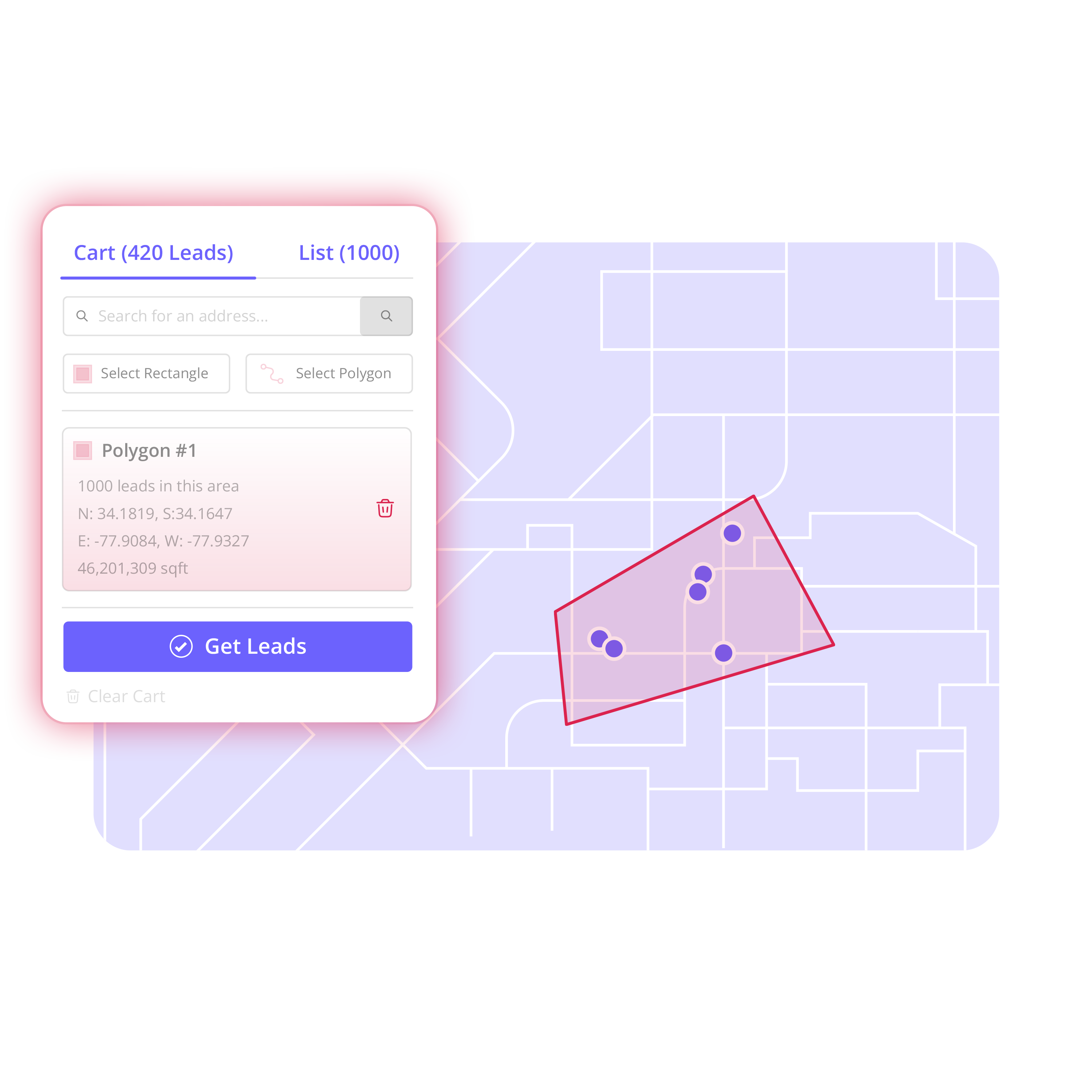
A practical platform lets you search for an address, neighborhood, ZIP code, service area, or market. From there, you draw the exact streets or boundaries your team wants to work. The software finds properties within that area so you can select the records that belong in the campaign.
Then comes the work that often gets pushed into disconnected files: adding records to a working list, enriching only the prospects worth pursuing, applying tags and statuses, assigning ownership, and exporting the result. Each step should make the next step easier.
This approach works because field sales is rarely a one-size-fits-all list problem. A roofing contractor may work around completed projects. An HVAC company may build a campaign around service coverage and seasonal demand. A solar canvassing manager may divide a neighborhood street by street. An acquisition manager may focus on a tightly defined investment zone.
The list should reflect the territory, the campaign, and the team responsible for it.
From map to outreach: the working process
Choose the area. Build the list. That is the basic job. A strong workflow keeps it simple without removing the controls that sales managers need.
1. Choose an area your team can own
Start with a real operating area, not a broad market pulled from a list vendor. Search for the location you want to work, then define the boundary. You may use a ZIP code as a starting point, but ZIP codes are often too wide for a focused campaign. Draw around the streets, subdivisions, job-site surroundings, or response area that actually matters.
Precise boundaries reduce overlap before it begins. If two reps are working nearby neighborhoods, each can receive a defined territory rather than an informal verbal instruction. Managers can see what is assigned, what remains open, and where the team has already concentrated effort.
For example, after a hail event, a roofing team may want to focus on the streets surrounding recent inspections rather than cover an entire city. Draw the targeted area, keep the campaign contained, and avoid sending reps into streets another team already owns.
2. Find the properties inside the boundary
Once the area is set, identify the properties within it. This is where a map becomes usable campaign infrastructure. Instead of manually comparing addresses against a drawn boundary, you can work from the property set inside that territory.
Do not assume every property needs to be added. A field manager may exclude commercial parcels from a residential campaign. An investor may filter for a specific property profile. A home-service company may remove addresses that sit outside its active service area, even if they are geographically close.
The goal is not to collect every possible record. The goal is to create a list that matches the campaign your team is prepared to execute.
3. Build a working list before adding more data
Add the selected properties to Contacts or a dedicated campaign list. This separates properties you have reviewed from raw records you may never use. It also gives the team a clear operating list rather than a temporary map view that disappears when someone changes a search.
This step sounds basic, but it solves a common breakdown. Many teams have a map in one tool, notes in another, and contact data in a spreadsheet that no one fully trusts. Reps end up asking which addresses are assigned, whether a homeowner was already contacted, or which version of the file is current.
Build one list for the campaign, name it clearly, and give it an owner. A label such as “North Ridge - Post-Storm Canvass - Week 1” is more useful than “New Leads.” It tells the team where the list came from, why it exists, and when it is relevant.
4. Enrich only the records that matter
Available homeowner and contact information can help a team prepare for outreach, but it should be used selectively. There is little operational value in enriching a large unqualified area before you know which properties you intend to pursue.
Enrich the selected records after you build the list. This controls unnecessary data work and keeps the campaign focused. If a sales manager identifies 150 homes for a direct-mail follow-up or a door-knocking route, those are the records worth preparing first.
Contact information is not consent to contact someone. Teams should use available information in accordance with applicable laws, internal policies, and the rules of the channels they use. The operational benefit is not indiscriminate outreach. It is better preparation for the prospects your business has chosen to work.
5. Organize the campaign for execution
A list becomes workable when people can tell what happened, what comes next, and who owns the next action. Use lists, tags, filters, statuses, and boards to create that clarity.
A canvassing team might tag properties by neighborhood section and use statuses such as unworked, knocked, follow-up, appointment set, and not interested. A solar manager may use filters to pull unworked homes near a rep's current route. An investor may segment a target area by acquisition priority and move prospects through an evaluation board.
The right structure depends on the team. Small owner-led operations may only need a campaign list and a few statuses. Larger organizations may need rep assignments, territory tags, and separate lists for mail, field activity, and follow-up. Avoid building an elaborate system before the team has a clear use for it. The best setup is the one your managers and reps will consistently maintain.
6. Export clean data into the tools you already use
Homeowner prospecting software does not need to replace your CRM, canvassing app, direct-mail provider, or sales process. Its job is to create a clean, geographically defined campaign list that those systems can use.
Export the records you need as a CSV, then load them into the outreach or tracking tool your team already relies on. Because you chose the territory, selected the properties, and organized the records before export, there is less cleanup at the end.
That matters when campaigns move quickly. A manager should not need a separate spreadsheet project to turn a neighborhood decision into a field list, calling segment, or mail audience.
Where geographic control pays off
Geographic control is especially valuable when the reason for prospecting is tied to a physical location. For roofing, that may mean building saturation around installed jobs or responding to a defined storm area. For HVAC, it may mean expanding around a service hub without stretching crews into inefficient routes. For solar, it may mean assigning streets so canvassers do not overlap. For real estate acquisition, it may mean finding and organizing properties within a tightly drawn target zone.
There are trade-offs. A broad territory can create more potential records, but it also creates more review, more assignment complexity, and more chances for outreach to lose focus. A narrow territory is easier to manage, but may not provide enough volume for a larger team. Start with the campaign capacity you have, then adjust the boundary based on what your team can realistically work.
Territory by Top Interaction is built for this middle layer between the map and the sales process. Search the area. Draw the boundary. Find properties. Build the list. Enrich selected records. Organize the work. Export the campaign.
The next time your team points to a neighborhood and says, “We should work there,” make that decision concrete. Define the streets, assign the ownership, and hand your team a list they can use before the opportunity goes cold.