
A completed roof on a visible street is more than a finished job. It is a reason to work the surrounding blocks while the project is still easy for neighbors to notice. The best door knocking strategies start there: with a defined area, a clear reason for being there, and a prospect list your team can actually work.
Random canvassing burns daylight. Reps walk too far, knock homes that do not fit the campaign, overlap each other, and come back with notes that never make it into a usable follow-up process. A tighter plan gives the team a better conversation at the door and gives management a clearer view of what happens next.
1. Start with the neighborhood, not the route
The strongest door-knocking campaigns begin with a geographic reason to be there. For roofing teams, that may be a recently completed job, a storm-affected area, a neighborhood with aging roofs, or a market where the company wants more visibility. For HVAC, solar, restoration, and property-management teams, the same rule applies: choose the area before asking reps to start knocking.
A street-by-street plan does not need to be huge. In fact, smaller campaigns are often easier to manage. A defined neighborhood lets the team use the same local context at every door, track coverage, and follow up without sorting through a broad, messy list later.
Before the campaign begins, decide what makes a property relevant. That may include property type, ownership status, service area, visible conditions, or proximity to a recent job. The goal is not to assume every address is a qualified opportunity. The goal is to give your team a logical territory to work.
2. Build a list before reps leave the office
A rep should not spend the first hour of a canvass figuring out where the territory begins or which homes belong in it. Build the prospect list first, then assign the work.
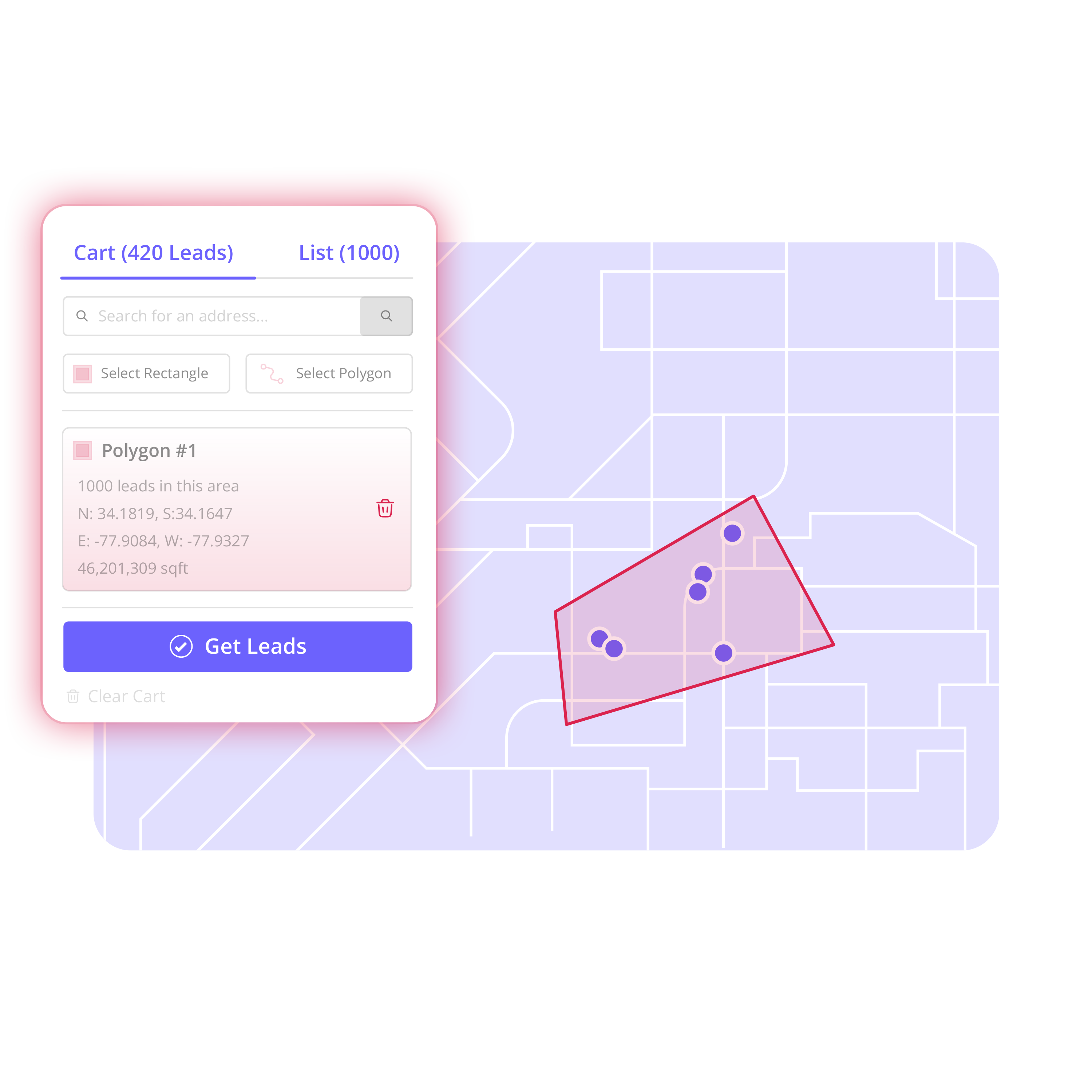
Choose the area on a map. Draw the exact streets or neighborhood your team wants to prospect. Find the available properties inside that boundary, select the records that fit the campaign, and create an Audience for the group. This turns a geographic idea into a defined piece of work.
For example, a roofing company can turn its last roofing job into its next neighborhood campaign. Locate the completed job, draw the surrounding streets, select the properties your team wants to pursue, and organize them as one campaign. Instead of telling reps to “work around the job,” you can give them a clear set of homes and a shared campaign name.
Territory supports this map-to-list workflow: Choose the area. Build the list. That matters because the list is where ownership, notes, follow-up, and exports begin.
3. Give every rep a simple reason to knock
Door knocking works better when the opener is specific and honest. A vague introduction puts the homeowner on guard. A relevant reason gives the conversation context without pretending there is an existing relationship.
For a roofing campaign around a completed job, a rep might say: “We recently completed a roof nearby and are introducing ourselves to homeowners on this block. Have you had any concerns about your roof after the recent weather?”
That is better than leading with a hard pitch or a broad claim about what every home needs. It explains why the rep is present, names the subject, and gives the homeowner an easy way to respond.
The exact script depends on the campaign. Storm-response teams may focus on visible storm conditions. HVAC teams may focus on service availability in a specific area. Solar teams may focus on whether a homeowner has considered an energy evaluation. Keep the first sentence short. The purpose is to start a conversation, not deliver the full presentation on the porch.
4. Ask questions that qualify the next step
The best conversations are not monologues. Reps need a few useful questions that reveal whether there is a reason to continue, follow up later, or move on.
For roofing, useful questions may cover the age of the roof, recent leaks, prior inspections, insurance concerns after a storm, or whether the homeowner has noticed missing shingles. For other home-service campaigns, the questions should match the service and the campaign trigger.
Avoid turning qualification into an interrogation. One or two relevant questions are usually enough to determine whether a homeowner wants more information. If there is interest, the rep can ask for the appropriate next step, such as an inspection request, a callback, or permission to leave information.
Available contact information is not permission to market. Your team should follow applicable federal, state, and local rules, including any do-not-knock requirements, posted no-soliciting notices, and company policies. A disciplined campaign protects your reputation as much as it improves execution.
5. Treat “not now” as a follow-up category
Most doors will not produce an immediate appointment. That does not make the interaction worthless. A homeowner may be unavailable, uninterested today, planning a future project, or willing to speak later. If reps record all of those outcomes as a generic “no,” the business loses useful context.
Set clear statuses before the team starts. Examples might include knocked, no answer, spoke with homeowner, follow up, appointment set, not interested, and do not contact. Keep the choices simple enough that reps use them consistently.
The note matters as much as the status. “Roof is 14 years old, homeowner asked to call after work next Thursday” gives the office a real reason and time to follow up. “Talked to owner” does not. Ask reps to capture the few details that affect the next action, not a long recap that nobody will read.
6. Protect the territory from overlap
Nothing frustrates a sales team faster than two reps knocking the same homes or debating who owns a neighborhood. Overlap also creates a poor experience for homeowners who see multiple representatives from the same company in a short period.
Assign campaign areas before fieldwork begins. If multiple reps work the same neighborhood, divide the Audience clearly and use assignees to show ownership. Managers should be able to see which prospects belong to whom and which records still need attention.
This is where a map-first process beats a loose spreadsheet. You can see the territory, build the selected properties into an organized group, and assign the work before it turns into confusion. When a campaign changes, update the assignment rather than relying on verbal instructions in a morning meeting.
7. Use leave-behinds with a clear purpose
A door hanger, flyer, or card should support the conversation, not replace it. The best leave-behinds answer three basic questions: who visited, why they were in the neighborhood, and how a homeowner can take the next step.
For a completed-job campaign, mention the nearby work without disclosing customer details or overstating results. Include a direct contact method and a simple call to action. If the team is working after storm activity, make sure the material matches the actual service you can provide and does not imply damage where none has been confirmed.
Reps should log when material was left. That detail helps distinguish an untouched address from a home where someone may recognize the company name on a later attempt.
8. Work the campaign in passes, not one sweep
A single knock is often just a first attempt. People are at work, picking up children, traveling, or simply not answering. A well-run campaign uses planned passes at different times instead of treating the first visit as the only chance.
Do not keep showing up without a reason. Set a reasonable attempt policy based on local rules, homeowner preferences, and your company standards. If a homeowner asks not to be contacted, record it immediately and honor it.
Use the first pass to establish coverage and capture outcomes. Use later passes for no-answer homes, requested callbacks, and prospects with a clear reason for follow-up. This keeps reps focused on the records that need action instead of repeatedly walking the whole neighborhood.
9. Enrich only the records that matter
Not every property in a territory deserves the same level of effort. Once reps identify the homes worth pursuing, add available homeowner or property-owner contact information selectively. Build the territory first. Enrich what matters.
This approach reduces unnecessary cleanup and keeps your working list focused. A manager may choose to enrich follow-up prospects, owners of specific property types, or records selected for a phone or direct-mail campaign. The exact channel depends on the campaign and applicable outreach rules.
Organize enriched contacts alongside field notes and statuses. Then export the campaign-ready data into the sales or outreach tools your team already uses. From map to prospect list, the handoff should be clear enough that the next person knows what to do without decoding a spreadsheet.
10. Review the field process every week
Door knocking is a field operation, so the plan should improve from real field feedback. Ask reps where the territory was too broad, which streets had access issues, whether the opener felt natural, and which statuses created confusion. Review the records that turned into meaningful follow-up and the records that sat untouched.
Do not measure the campaign only by doors knocked. Look for operational gaps: duplicate records, unclear assignments, weak notes, slow list preparation, and no defined follow-up owner. Fixing those problems makes the next neighborhood easier to work.
Your next campaign does not need a bigger radius or a longer script. It needs a clear area, a practical reason to knock, and a list the team owns from first door to final follow-up. Start with the neighborhood, organize the work, and let each conversation lead to a defined next step.