
Solar teams rarely lose time because they cannot find another lead source. They lose time because the right neighborhoods are not defined, reps overlap, contact lists need cleanup, and leads sit between a map, a spreadsheet, and a CRM. The best solar lead generation tools solve different parts of that problem. The strongest setup helps your team choose an area, build a list, start conversations, and track what happens next.
A tool is only useful if it fits the way your team sells. A high-volume appointment-setting channel may make sense for a call center. A canvassing-heavy dealer or local installer needs clearer territory control and field execution. Start with the sales motion, then select the tools that support it.
What the Best Solar Lead Generation Tools Should Do
Solar lead generation is not one task. It includes finding homeowners in the right areas, creating interest, qualifying opportunities, booking appointments, and keeping follow-up from falling through the cracks.
That is why an all-in-one promise can be misleading. A mapping tool should not be expected to run your entire CRM. An ad platform will not prevent two reps from knocking the same street. A CRM cannot fix a poorly defined prospecting area after the fact.
For most local solar teams, the practical stack has seven functions: territory and list building, canvassing, customer relationship management, paid search, paid social, scheduling, automation, and proposal support. You may not need every category on day one, but you do need clear handoffs between them.
1. Territory and Property List-Building Software
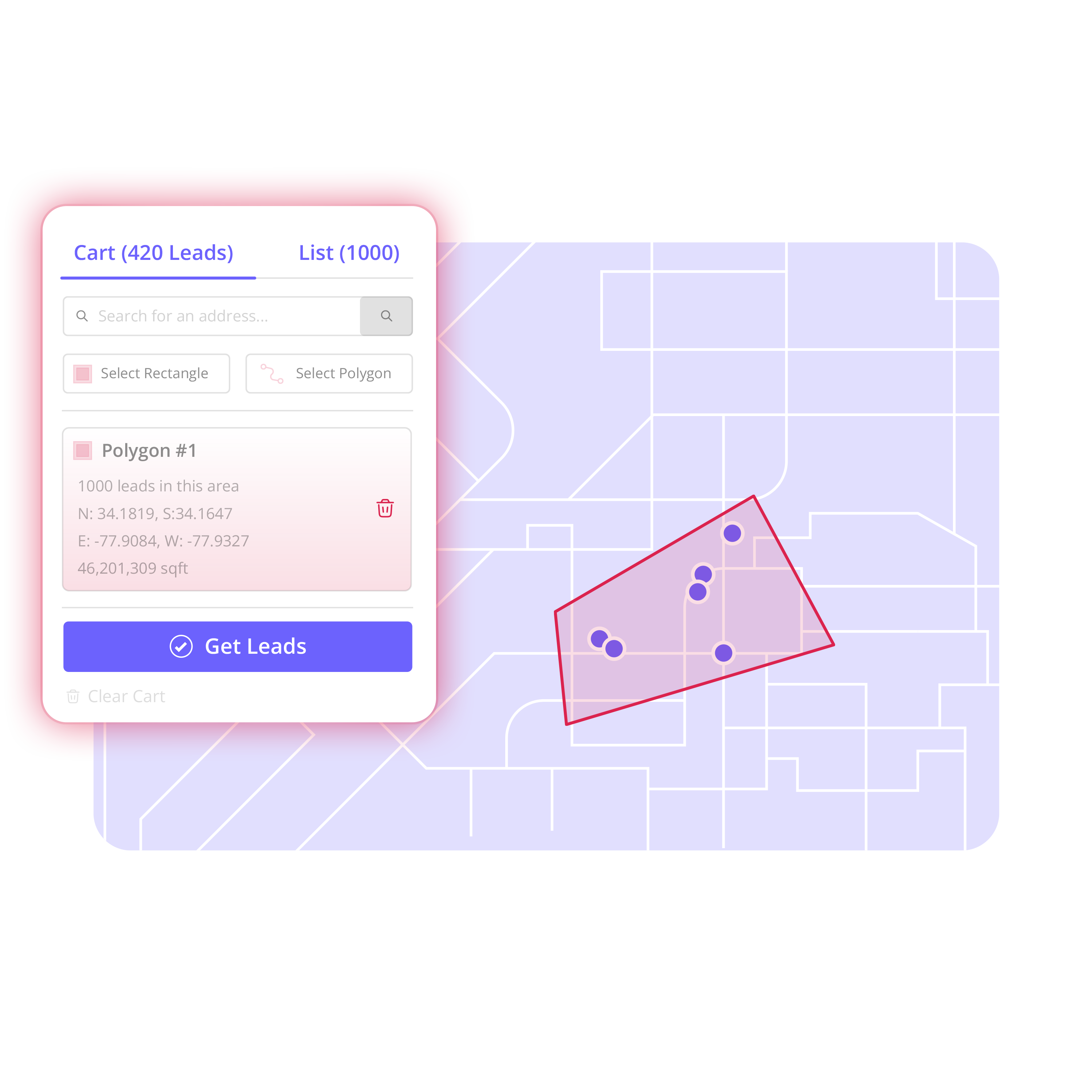
For neighborhood-based solar sales, this is where campaigns should begin. Instead of buying a broad list for an entire ZIP code, choose the streets, subdivisions, or service area your team can actually work. Find the properties inside that boundary, select the records that fit the campaign, and build a usable prospect list.
Territory by Top Interaction fits this role. Search an address, neighborhood, ZIP code, or market. Draw the exact streets your team wants to prospect. Add selected properties to Contacts, enrich only the records worth pursuing with available information, organize them by list, tag, status, or board, then export a clean CSV for the systems you already use.
This category is especially useful when you are working around an installed system, a recent customer, a competitor’s activity, or a new market. It gives the sales manager a defined area to assign instead of a vague instruction to "work that neighborhood."
The trade-off is straightforward: property list-building software creates the campaign foundation, but it does not create homeowner demand by itself. Your team still needs a plan for doors, calls, direct mail, or digital follow-up.
2. Canvassing and Field Sales Tools
Canvassing platforms help door-to-door teams route reps, record knock outcomes, assign turf, and monitor field activity. They are useful when a manager needs to see which homes were visited, which conversations led to appointments, and which streets still need coverage.
Look for a platform that makes rep ownership visible and supports simple statuses such as no answer, not interested, follow up, appointment set, and sold. The best field tool is not the one with the longest feature list. It is the one reps will update between doors without slowing down.
Pair canvassing software with a territory-first list. Your manager can build a targeted campaign before reps enter the field, then use the canvassing tool to manage activity within that campaign. This reduces overlap and makes post-campaign reporting more meaningful.
3. A CRM That Handles the Full Sales Cycle
A CRM is where solar opportunities should live after the first meaningful interaction. It gives your team a place to assign ownership, track appointment dates, log follow-up, manage proposals, and see which source or neighborhood is producing qualified opportunities.
HubSpot, Salesforce, and industry-specific solar CRMs can all work, depending on the size and complexity of your operation. Smaller teams often need a simple pipeline and dependable reminders. Larger organizations may need custom stages, automated routing, reporting, integrations, and permissions across multiple markets.
Do not force your CRM to become your mapping and prospecting tool. Build the geographic campaign first, then send selected records into the CRM when they are ready for active outreach or when a rep has created an opportunity. That keeps raw prospect data from cluttering the sales pipeline.
4. Google Ads for High-Intent Demand
Google Ads can capture homeowners who are already searching for solar installation, panel costs, batteries, or local incentives. This is one of the more direct ways to generate inbound interest because the prospect has taken an active step.
The limitation is cost and competition. Search terms related to solar can be expensive, and not every form fill is ready for a sales conversation. Use specific campaigns by market, keep landing pages focused, and make sure someone responds quickly when a lead arrives.
Paid search works best when your team has tight service-area rules. There is little value in paying for inquiries outside your install footprint or in markets where you do not have appointment capacity. Align geographic targeting with real operational coverage.
5. Meta Ads for Local Awareness and Retargeting
Meta platforms can help solar companies reach homeowners by geography, build local awareness, and reconnect with people who have already visited a site or engaged with content. It is usually better at generating interest than capturing immediate purchase intent.
That makes campaign structure important. Avoid treating every lead form as equal. Ask enough questions to help your team prioritize follow-up, but do not make the form so long that completion rates collapse. Test creative that speaks to a real local concern, such as high utility bills, roof age, battery backup interest, or a neighborhood installation trend.
Use Meta to support the territory you intend to work. If your canvassing team is saturating a subdivision, localized advertising can make the name of your company more familiar before a rep knocks. It will not replace the conversation at the door, but it can support it.
6. Appointment Scheduling and Speed-to-Lead Tools
A solar lead is perishable when it first comes in. If a homeowner requests information and waits until the next day for a response, the urgency may be gone or another provider may have already called.
Scheduling tools give prospects a direct path to book a consultation, while call routing, text follow-up, and notification systems help your team respond faster. These tools matter most when leads come from paid channels, home shows, referrals, or web forms outside normal business hours.
Set clear rules before adding automation. Decide who owns the lead, how quickly they should respond, what happens after no answer, and when a lead returns to a shared queue. Automation should reinforce accountability, not hide it.
7. Proposal and Solar Design Software
Proposal and design tools do not usually create leads, but they help your team convert qualified interest into a credible next step. Once a homeowner agrees to an appointment, a clear system design, savings estimate, financing option, and proposal process can keep the sales cycle moving.
This is where many teams confuse lead volume with lead quality. More form fills will not fix a slow proposal process or inconsistent appointment experience. If reps are generating interest in the field but opportunities stall after the consultation, improve the handoff from appointment to design and proposal.
Choose a system that matches your operational process. A quick, simple proposal may be right for a high-volume sales team. A more detailed workflow may suit a company managing complex roofs, storage, multiple financing options, or in-house installation.
Build the Stack Around Your Actual Sales Motion
The right tools depend on how your leads enter the business. A door-to-door team may start with a defined neighborhood, build a property list, assign reps, and use a CRM only after a conversation creates interest. An inbound-focused company may start with search or social ads, route leads into a scheduler, and use geographic data to identify nearby homes for follow-up campaigns.
Many solar businesses run both motions. That is often the practical answer: use digital channels to create demand, then use geographic prospecting to work the surrounding area with purpose.
Keep the workflow simple. Choose the area. Find the properties. Build the list. Organize ownership. Enrich selected records when needed. Export into the systems your team already uses. Then measure outcomes by territory, source, rep, and campaign.
Available contact information does not equal permission to contact someone, so make sure your outreach follows applicable consent, calling, texting, and privacy requirements. Clean process protects your team as much as clean data does.
The best solar lead generation tool is not necessarily the platform with the most features. It is the one that removes the next operational bottleneck, gives your team clear ownership, and turns a market you want to work into a campaign your team can execute.